How Much Battery Does a Camper Van Need for Two Nights Off-Grid?
For two nights off-grid, start with how many watt-hours the van uses in a day. The battery label alone cannot answer the question. A fridge that cycles throughout the day and a laptop that runs for two hours contribute very different amounts to the total.
Here is a worked example for 48 hours without plugging in or counting on solar. Use it to see how the calculation works, then substitute measured or manufacturer figures for the equipment in your own van.
Make a small daily power budget
Assume the fridge uses 450 Wh per day, lights use 40 Wh, the vent fan uses 80 Wh, and devices use 180 Wh. Those are example inputs, not estimates for a specific model. Together they add up to 750 Wh per day, or 1,500 Wh for two days.
Break the budget into loads that keep running and loads you control. A fridge works even while you sleep. You can decide how long to leave a fan on or when to charge a laptop. Keep a separate row for anything the van only uses on some trips, such as a water pump or an electric cooking appliance.
For equipment with a steady draw, multiply watts by hours. For a cycling fridge, use energy consumption over a full day under similar conditions if you can. Multiplying its running wattage by 24 hours assumes the compressor never turns off. Victron’s battery sizing guide shows how to work through a full appliance list.
An electric burner illustrates the difference between watts and watt-hours. Suppose it draws 1,200 watts for 20 minutes at full power. That session uses about 400 Wh at the appliance, before inverter losses. Add it once to the two-night budget and the example rises from 1,500 Wh to 1,900 Wh before the allowance for losses.
Leave room for usable capacity and losses
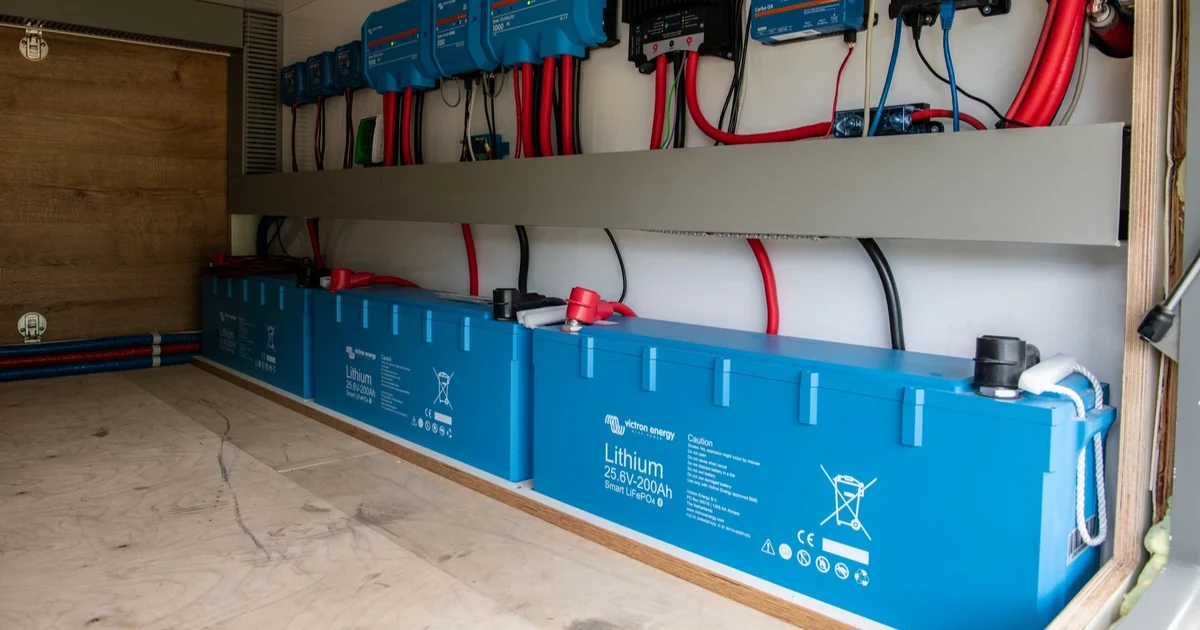
If you plan to use 80% of rated capacity and add 10% to the example demand for losses and variability, the target is about 2,063 Wh of rated storage. At a nominal 12.8 volts, that is roughly 161 Ah. A 200 Ah, 12.8 V battery has 2,560 Wh of nominal capacity. The allowed usable amount depends on the battery and system.
Using the same assumptions on that larger budget, multiply 1,900 Wh by 1.10 and divide by 0.80. That gives about 2,613 Wh of rated capacity, or about 204 Ah at 12.8 volts. A single cooking session changes the result enough that the illustrative 200 Ah battery falls below this second target.
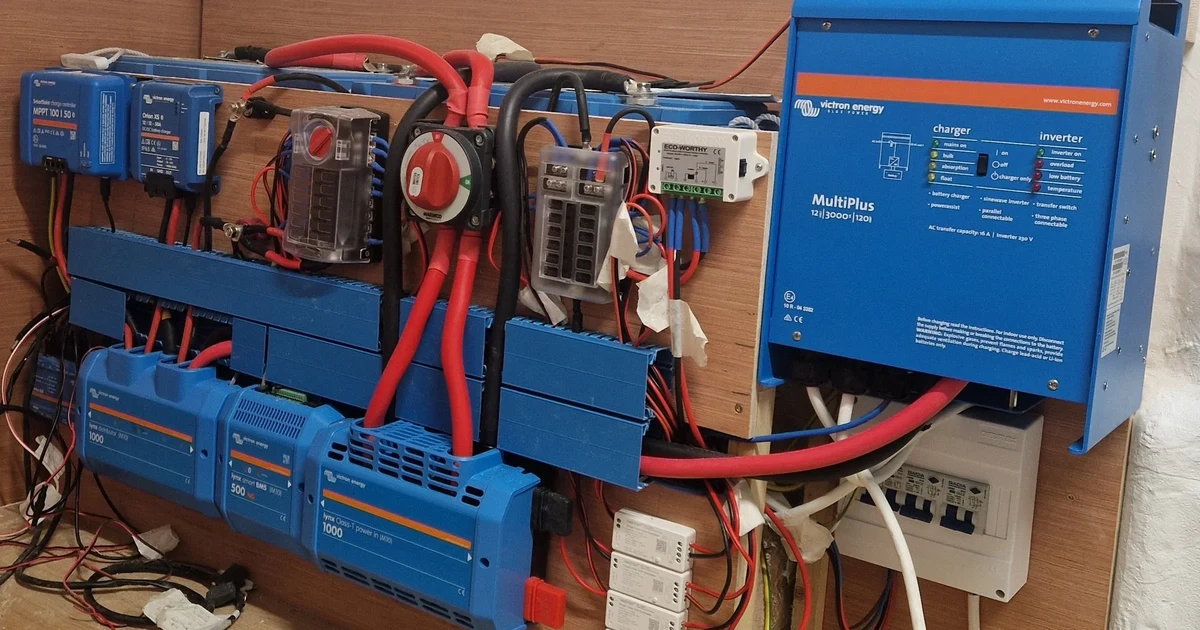
A larger electric cooking load or long periods of heating or cooling can change the result quickly. Inverter capacity is a separate question. You need enough instantaneous power to run the appliance as well as enough energy to run it for the desired time.
Check the inverter against the loads you expect to run together. If the kettle and cooktop will rarely overlap, that’s a different requirement from running both while the fridge starts. Use the appliance specifications and the inverter’s continuous and surge ratings. For the battery, check the manufacturer’s usable capacity and discharge limits for the conditions you expect.
Size for the weekend you actually take
If you expect to charge while driving or from solar, model that as a separate scenario. That way you can see how the van behaves on a cloudy weekend when it never leaves camp. Our camper van solar guide covers the charging side of the equation.
Try the worksheet twice. For the first pass, assume you arrive with a full battery and recharge nothing. For the second, add only the charging you can reasonably expect on that route. You’ll see whether moving camp every day is doing most of the work, or whether you can stay put for two nights with some energy left over.





COMMENTS
Please note that all comments will be checked by our team before being approved.