When the Trip Ends, the Toyota Sienna Gets Its Passenger Seats Back
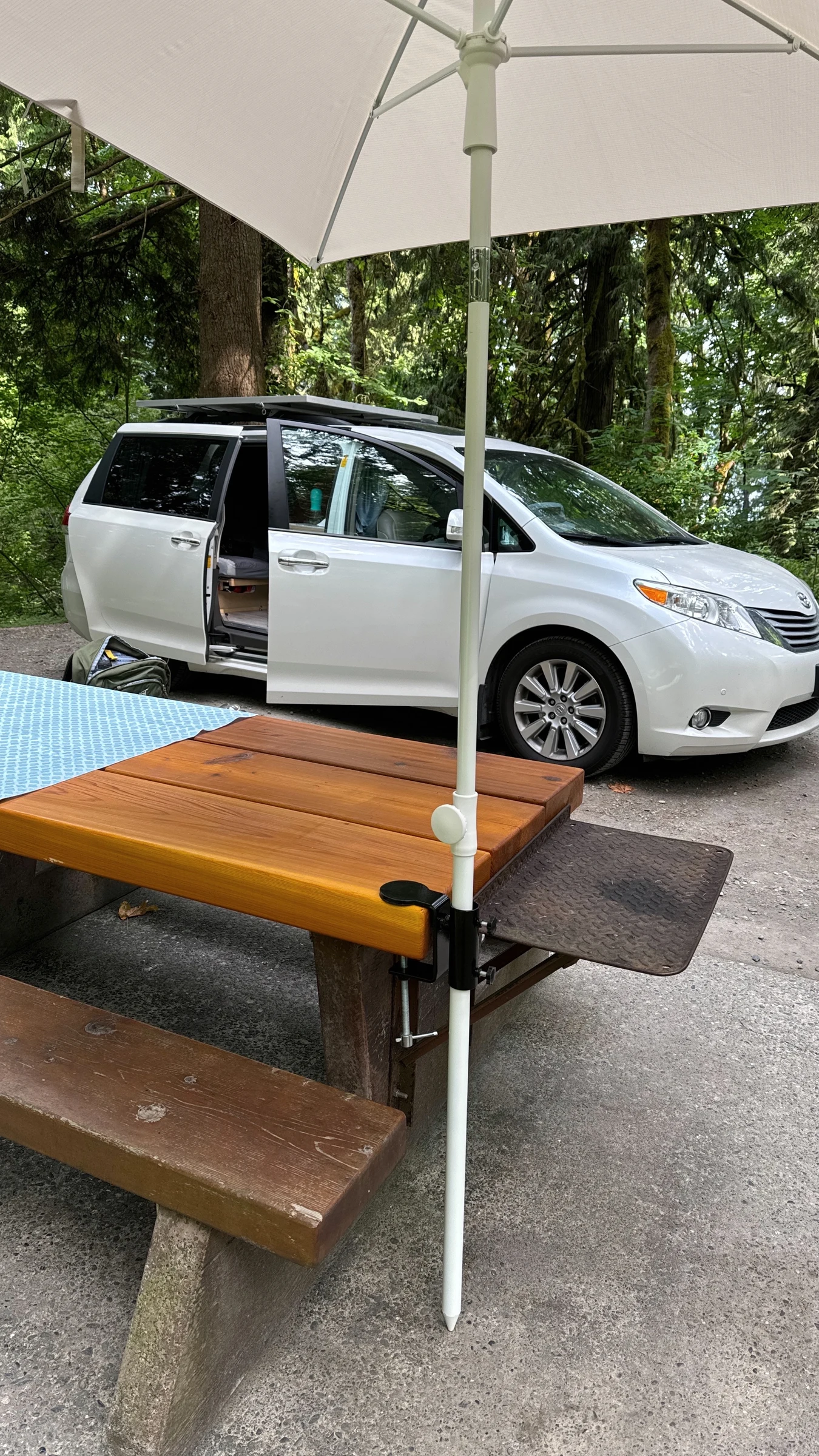
Andriy built the camper inside his 2014 Toyota Sienna around a job most conversions never have to do. When the trip is over, the camping setup comes out and the minivan can carry passengers again. He did it by making the bed, kitchen, and other parts into removable modules.
The SolarVanQuest build log shows how he fitted a sink, fridge, and electrical setup for two people while keeping the camping pieces removable.
Break the camper into jobs
Under the bed, sink, fridge, and cooking storage sits a floor Andriy documents separately. Looking at those parts one at a time makes it easier to see which depend on one another and which you could leave at home on a short trip.
For the sleeping platform, Andriy joined three plywood sections with lift-off hinges and cut ventilation holes under the mattress. The foam mattress started out 52 inches wide. He trimmed it to 50 inches so it would fit between the walls. The sections can also fold into a sofa or lounge, which gives the rear a place to sit during the day.
Modularity also changes how you plan repairs. With separate pieces, you can work on a module outside the vehicle. At the same time, you have to think about where every module goes when removed, how you carry it, and what keeps it secured while driving.
Cooking equipment had to fit under the same low roof. Andriy built an indoor electric kitchen with an induction burner and compact appliances, so a rainy stop doesn’t require setting up an outdoor stove. Food and water still need to come out when the van goes back to passenger duty. Planning how those supplies move is part of making the cabinetry removable.
The advantage shows up between trips
A Sienna has less standing room than a full-size cargo van, so the arrangement has to work with someone seated or moving through the doors. The payoff is that the van can go back to passenger use. A second vehicle or a permanent interior makes that a much less important feature.
Andriy says he can return the Sienna to passenger use in about an hour. It’s worth looking at the conversion as several smaller jobs. You have to empty the modules, get the larger pieces through the doors, and find somewhere to keep them until the next trip. His timeline describes this build and the way he uses it.
The official project tour puts the modules in context. Watch how they occupy the rear of the van and where the cook, sleeper, and luggage all go in the same small space.
What to borrow for your own build
Plan where the pieces will live at home before cutting wood. Make the first drawing for a weekend you actually take, with the number of people and the gear you actually bring. If the resulting camper is too cumbersome to remove, the design is still worth simplifying. Our camper van conversion roundup shows what permanent layouts can do with more room.
Start with the first thing you’d want to carry on a weekday. If that means bringing the passenger seats back, check whether the bed platform, floor, and kitchen all need to come out to make it possible. If you simply need space for a long box, you might be able to remove one module and leave the rest.
Photo SolarVanQuest.




COMMENTS
Please note that all comments will be checked by our team before being approved.