20 Best Places to Visit in Switzerland in Winter That Will Force You to Stop Dreaming and Start Booking
Dreaming of snow-covered peaks and cozy alpine charm? These 20 best places to visit in Switzerland in winter are magical, scenic, and wonderfully serene, perfect for discovering frosty adventures, festive vibes, and breathtaking mountain beauty at its finest.

Winter in Switzerland feels almost unreal, like stepping into a world shaped by snow, light, and silence. Mountains, villages, and lakes are covered in white, creating a calm you notice the moment you arrive.
What makes it special is the variety within a short distance. You can go from the high glaciers of Zermatt to the softer lakeside views of Montreux in just a few hours, while the winter feeling stays the same.
With the right plan, it becomes more than just a ski trip. You can slow down, explore, and take in the quiet beauty around you. Here are 20 of the best places to visit in Switzerland in winter.
1. Zermatt (Valais)
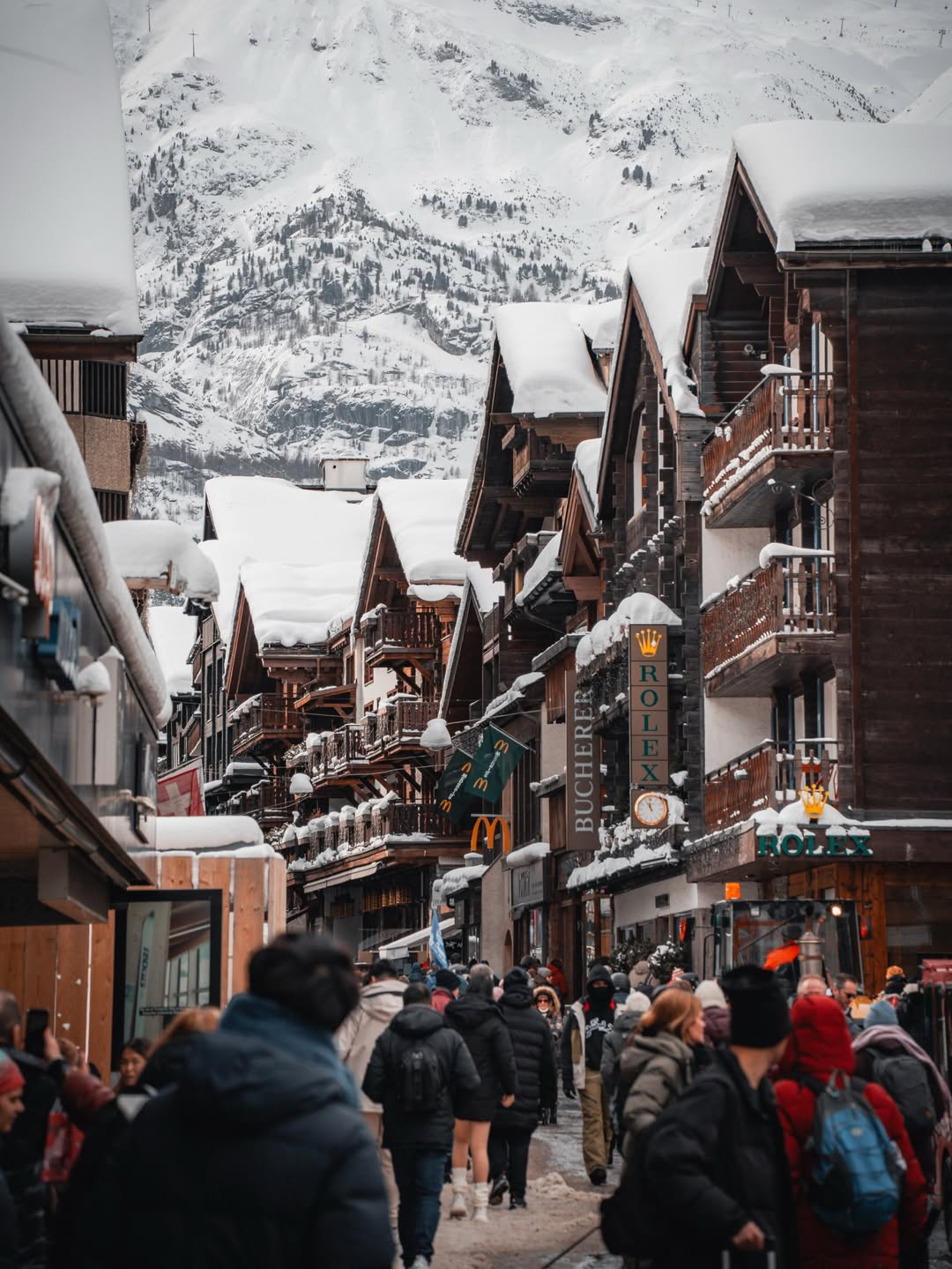
You’ll feel it immediately when you arrive. No cars, just the soft crunch of snow under boots and the silhouette of the Matterhorn rising at 4,478 meters like something unreal. The air is sharp, clean, and almost silent except for distant ski lifts humming.
Zermatt sits at 1,620 meters and offers over 360 km of ski slopes connected with Italy’s Cervinia. Even if you don’t ski, the Gornergrat railway climbs to 3,089 meters in just 33 minutes, giving you panoramic views of 29 peaks above 4,000 meters. A return ticket costs around CHF 120.
If you go early morning, before 9:00 AM, you’ll catch the Matterhorn glowing pink in sunrise light. It’s one of those moments that feels too perfect to be real.
What to do
- Ride the Gornergrat train for panoramic views
- Ski or snowboard across Switzerland–Italy border
- Walk through the car-free village at night
Practical intel
- Best time: December to March
- Ski pass: CHF 80–95 per day
- Train from Zurich: ~3.5 hours
- Peak crowd: Christmas and February holidays
Best for
Iconic scenery, skiing, luxury alpine atmosphere
2. St. Moritz (Graubünden)
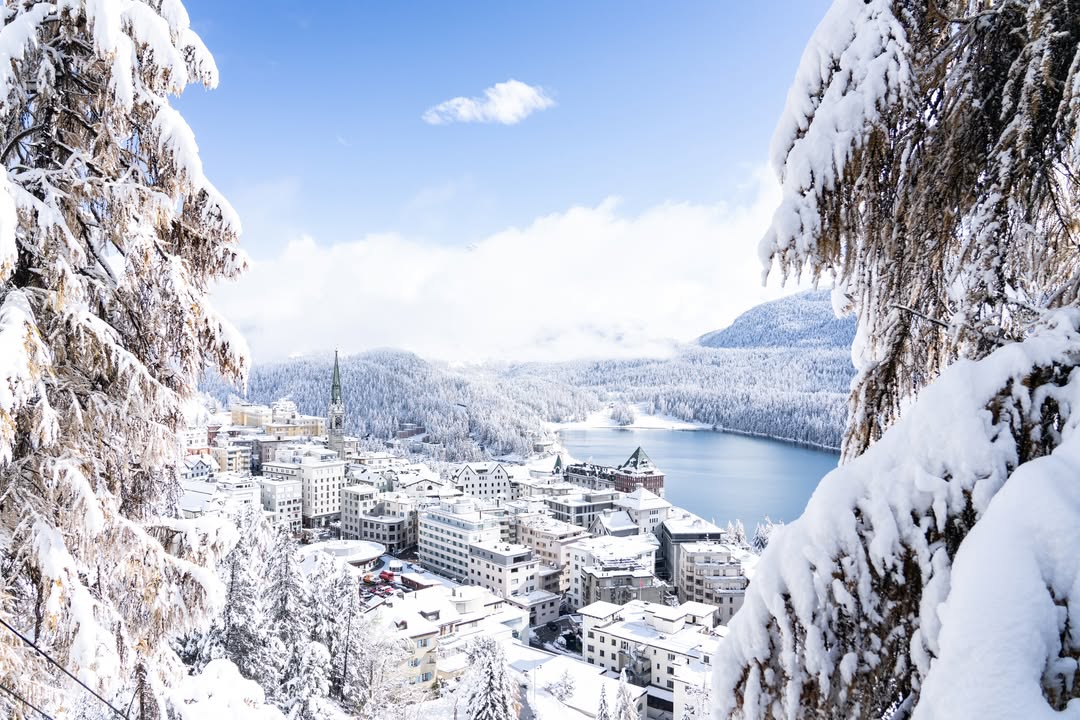
This is where winter feels glamorous. You’ll notice frozen lakes turned into polo fields, horse races, and even cricket matches. It’s not just cold here, it’s theatrical.
St. Moritz sits at 1,822 meters and gets around 300 sunny days a year. The ski area offers 350 km of pistes, and the famous Cresta Run attracts thrill-seekers sliding head-first at speeds up to 130 km/h. Expect high prices. A coffee can cost CHF 6 to 8.
Visit in February if you want to catch the White Turf horse races on the frozen lake. It’s surreal watching horses sprint across ice at full speed.
What to do
- Walk across the frozen Lake St. Moritz
- Watch or attend White Turf events
- Ski Corviglia slopes
Practical intel
- Best time: January to February
- Ski pass: CHF 90+ per day
- Hotel range: CHF 250–1000 per night
- Train from Zurich: ~3 hours
Best for
Luxury travel, unique winter events, sunny alpine weather
3. Jungfraujoch (Bernese Alps)
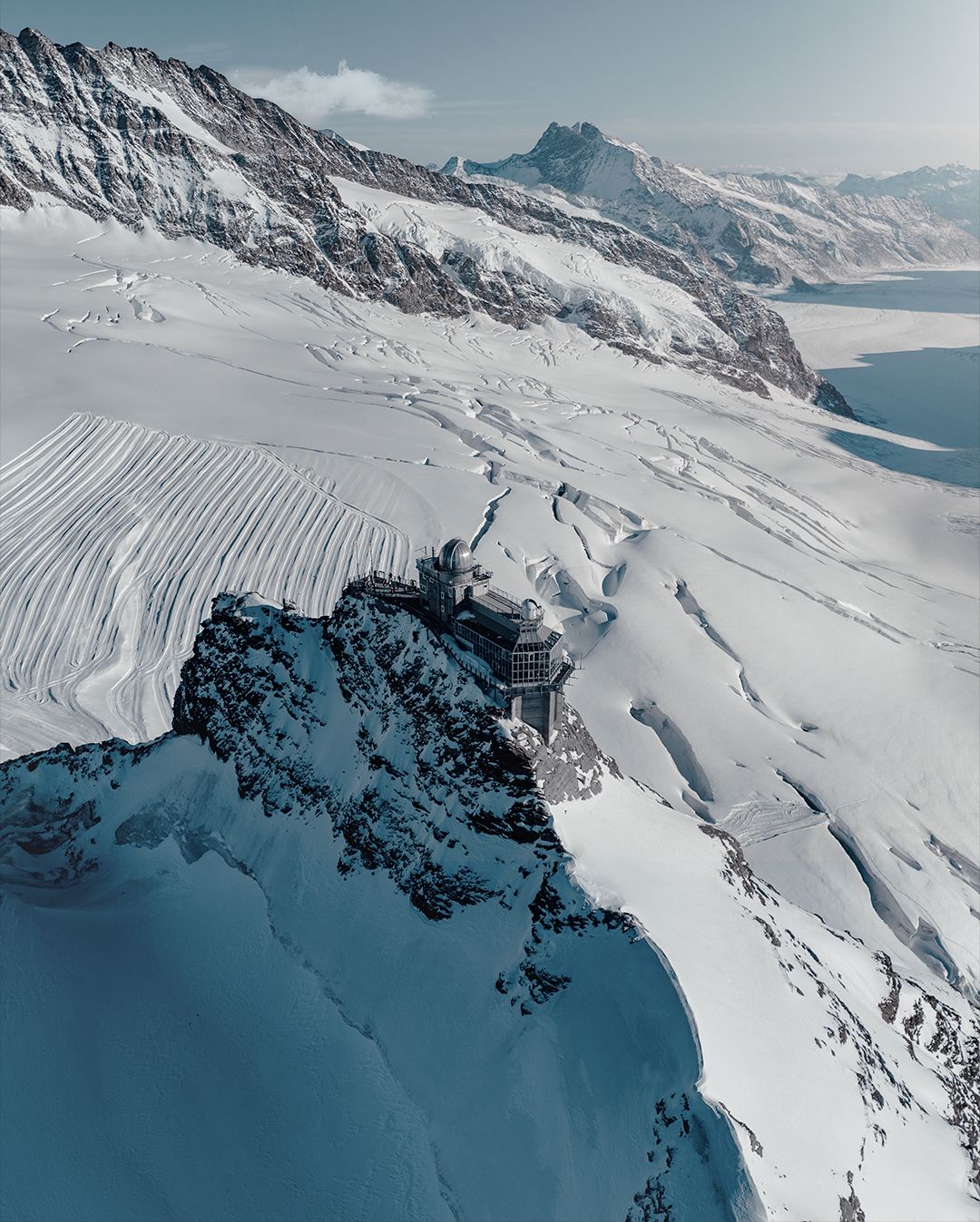
You’ll feel like you’re entering another planet. The train tunnels through mountains and suddenly opens into a world of snow and ice at 3,454 meters, the highest railway station in Europe.
The journey from Interlaken takes about 2 hours via the Jungfrau Railway. Tickets cost around CHF 210 round-trip, but what you get is access to the Aletsch Glacier, which stretches 23 km, the longest in the Alps.
Step outside onto the observation deck and the cold hits differently here. It’s sharper, thinner. If you pause for a second, you’ll realize how small everything feels.
What to do
- Walk inside the Ice Palace tunnels
- Step onto the Sphinx observation deck
- View the Aletsch Glacier
Practical intel
- Best time: Clear days December to March
- Temperature: Often below −10°C
- Travel from Interlaken: ~2 hours
- Altitude warning: take it slow
Best for
Once-in-a-lifetime views, snow landscapes, photography
4. Lucerne (Lake Lucerne region)
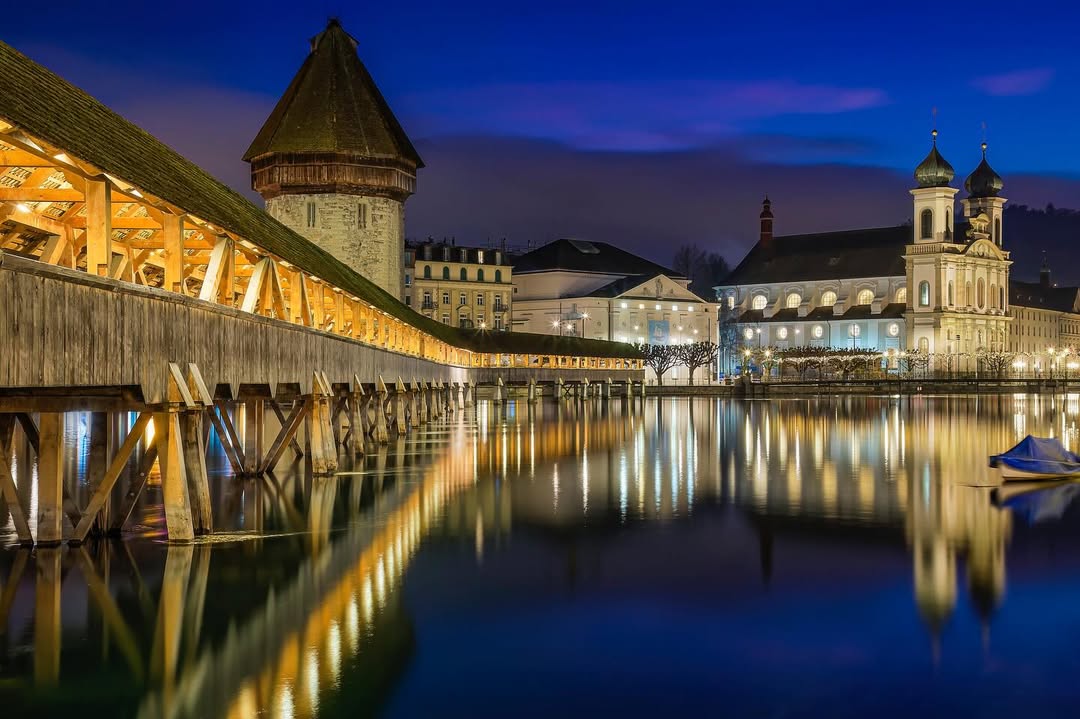
Lucerne feels softer compared to the mountains. Snow falls gently over medieval bridges, and the lake reflects lights from old buildings. It’s quieter, more romantic.
The city sits at just 435 meters, so winters are milder, usually between −2°C and 5°C. From here, you can reach Mount Titlis in under 45 minutes, where the rotating cable car climbs to 3,020 meters. A return trip costs about CHF 96.
If you walk across Chapel Bridge in the evening, when the lights reflect on the water, you’ll understand why people slow down here.
What to do
- Walk across Chapel Bridge and Old Town
- Take a day trip to Mount Titlis
- Cruise Lake Lucerne (if weather allows)
Practical intel
- Best time: December for Christmas markets
- Titlis excursion: ~5 hours total
- Train from Zurich: ~1 hour
- Budget meals: CHF 20–30
Best for
Relaxed winter vibes, culture, scenic city experience
5. Davos (Graubünden)
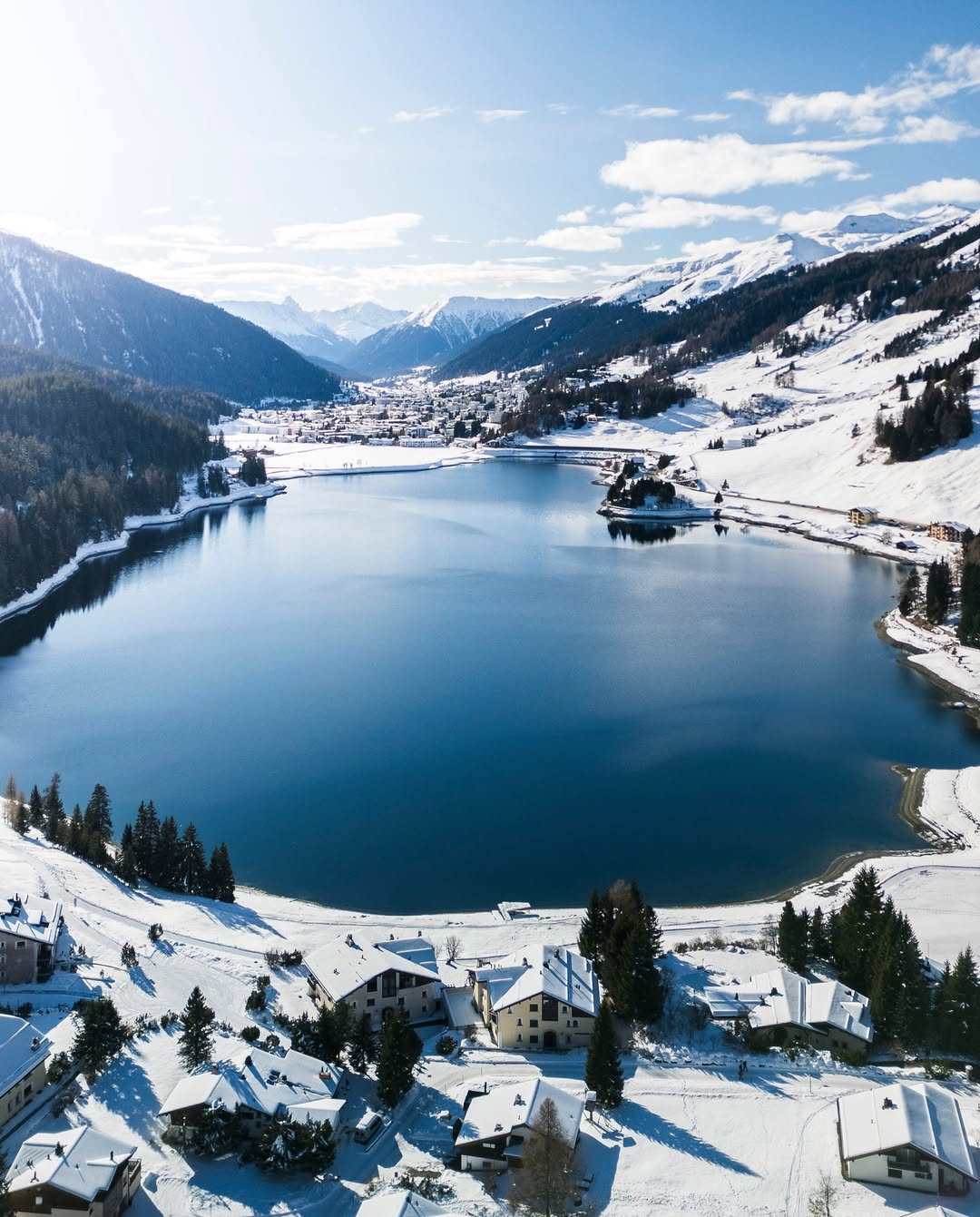
Davos feels expansive. Wide valleys, long ski runs, and a slightly more laid-back energy compared to St. Moritz. You’ll notice fewer crowds but just as much snow.
It sits at 1,560 meters and offers about 300 km of ski slopes across six areas. It’s also famous for hosting the World Economic Forum each January, when global leaders quietly take over the town.
If you go outside peak forum dates, you’ll find better prices and space to breathe. The Parsenn ski run stretches 12 km, one of the longest in Europe.
What to do
- Ski the Parsenn run
- Try cross-country skiing trails (100+ km)
- Visit nearby Klosters village
Practical intel
- Best time: January to March
- Ski pass: CHF 75–90
- Train from Zurich: ~2.5 hours
- WEF period: late January, expect price surge
Best for
Serious skiing, fewer crowds, expansive alpine terrain
6. Wengen (Bernese Oberland)
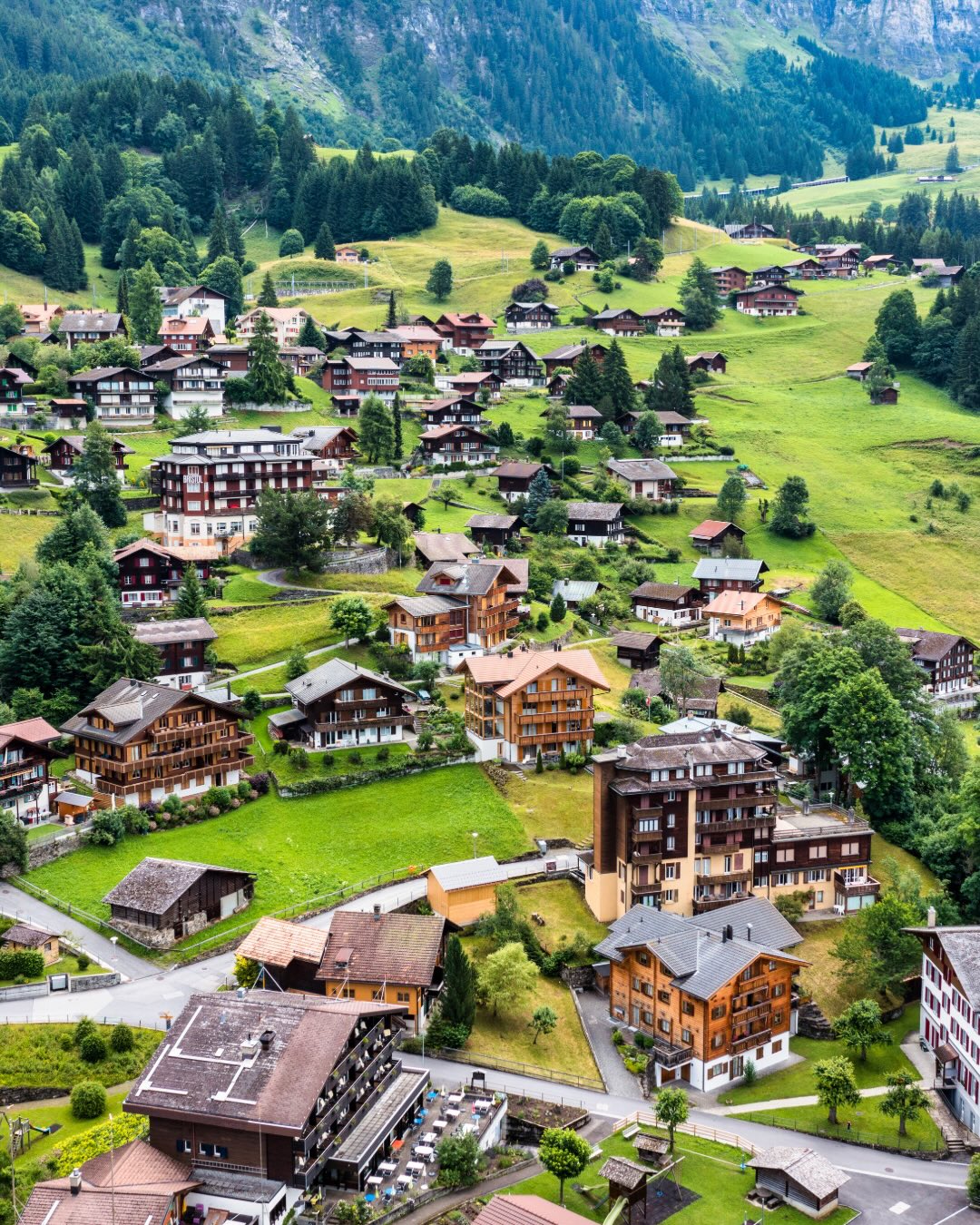
You’ll arrive by train and immediately notice the quiet. No engines, no traffic, just wooden chalets perched at 1,274 meters with uninterrupted views of the Lauterbrunnen Valley dropping nearly 800 meters below.
Wengen is part of the Jungfrau ski region with over 200 km of slopes, but it feels far more intimate than nearby resorts. The famous Lauberhorn downhill race runs here every January, covering 4.4 km and reaching speeds of 160 km/h.
If you wake up early and step outside, you’ll see the valley still covered in shadow while the peaks glow gold. It’s a subtle but unforgettable contrast.
What to do
- Ski or watch the Lauberhorn race
- Take the train down to Lauterbrunnen
- Walk through the quiet village paths
Practical intel
- Best time: January to March
- Access: train only from Lauterbrunnen (15 minutes)
- Ski pass: CHF 70–85
- Crowd level: moderate, quieter than Grindelwald
Best for
Peaceful alpine stays, scenic skiing, slower travel
7. Grindelwald (Bernese Alps)
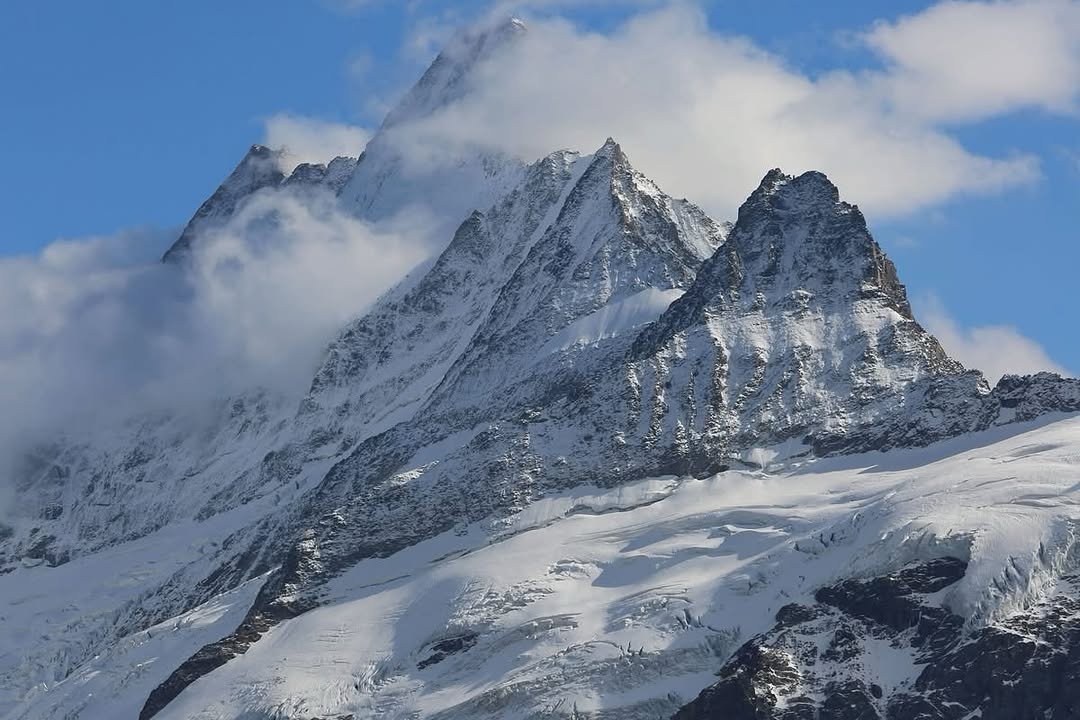
Grindelwald feels more energetic. You’ll hear laughter, ski chatter, and the buzz of cable cars heading up toward First Cliff Walk and Kleine Scheidegg. The Eiger’s north face towers at 3,967 meters right above you.
The resort offers about 160 km of slopes locally, but connects to the wider Jungfrau region for over 200 km. The First Cliff Walk suspension bridge sits at 2,168 meters and is free with a lift ticket that costs around CHF 68 round trip.
If you go just before sunset, the sky shifts quickly and the Eiger turns deep orange. It’s one of those moments where everyone just stops and looks.
What to do
- Walk the First Cliff Walk
- Ski beneath the Eiger north face
- Take gondola rides for panoramic views
Practical intel
- Best time: December to March
- Lift ticket (First): ~CHF 68
- Train from Interlaken: ~35 minutes
- Popular with families and groups
Best for
Adventure, dramatic mountain views, lively atmosphere
8. Montreux (Vaud)
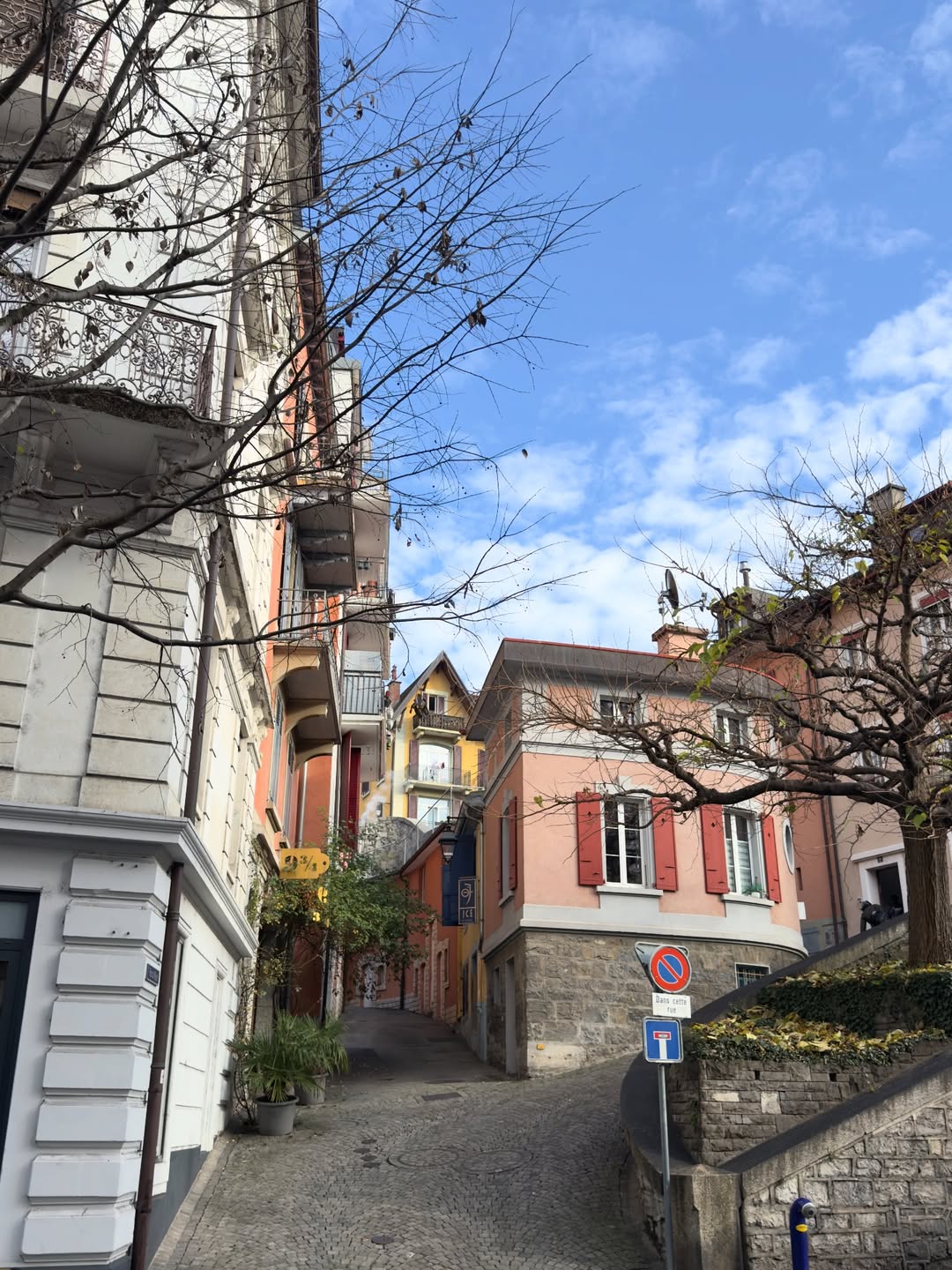
Winter here feels softer and almost Mediterranean compared to the Alps. You’ll walk along Lake Geneva with snow-dusted mountains in the background and palm trees surprisingly still standing.
Montreux sits at just 390 meters elevation, so temperatures hover around 0°C to 8°C. The Montreux Christmas Market attracts over 500,000 visitors annually, stretching along 2 km of lakeside promenade with over 150 stalls.
If you go in the evening, lights reflect off the lake and the entire shoreline glows. It’s more about atmosphere than adventure.
What to do
- Visit Montreux Christmas Market
- Walk the lakeside promenade
- Take a short train to Rochers-de-Naye
Practical intel
- Best time: Late November to December
- Market entry: free, food CHF 10–20
- Train from Geneva: ~1 hour
- Less snow in town, more on nearby peaks
Best for
Festive vibes, mild winter, lakeside scenery
9. Arosa (Graubünden)
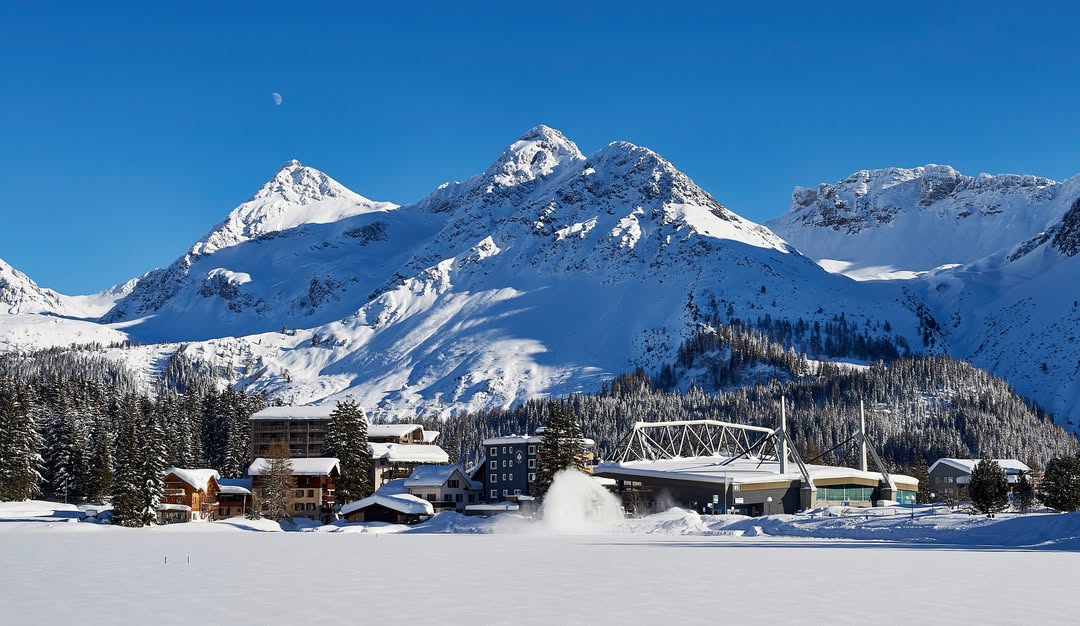
Arosa feels tucked away. Surrounded by peaks at 1,775 meters, it’s quieter and more relaxed, with a frozen lake right in the center that becomes a natural gathering spot.
The Arosa Lenzerheide ski area offers about 225 km of pistes, and lift passes cost around CHF 80. The region is also known for its 60 km of winter hiking trails and reliable snow from December through April.
If you walk around Obersee Lake at dusk, you’ll see lights reflecting off the ice and hear almost nothing. It’s calm in a way that bigger resorts rarely are.
What to do
- Ski Arosa Lenzerheide area
- Walk around frozen Obersee Lake
- Try winter hiking trails
Practical intel
- Best time: January to March
- Train from Chur: ~1 hour scenic route
- Ski pass: ~CHF 75–85
- Family-friendly infrastructure
Best for
Relaxation, winter walks, balanced ski experience
10. Appenzell (Northeastern Switzerland)
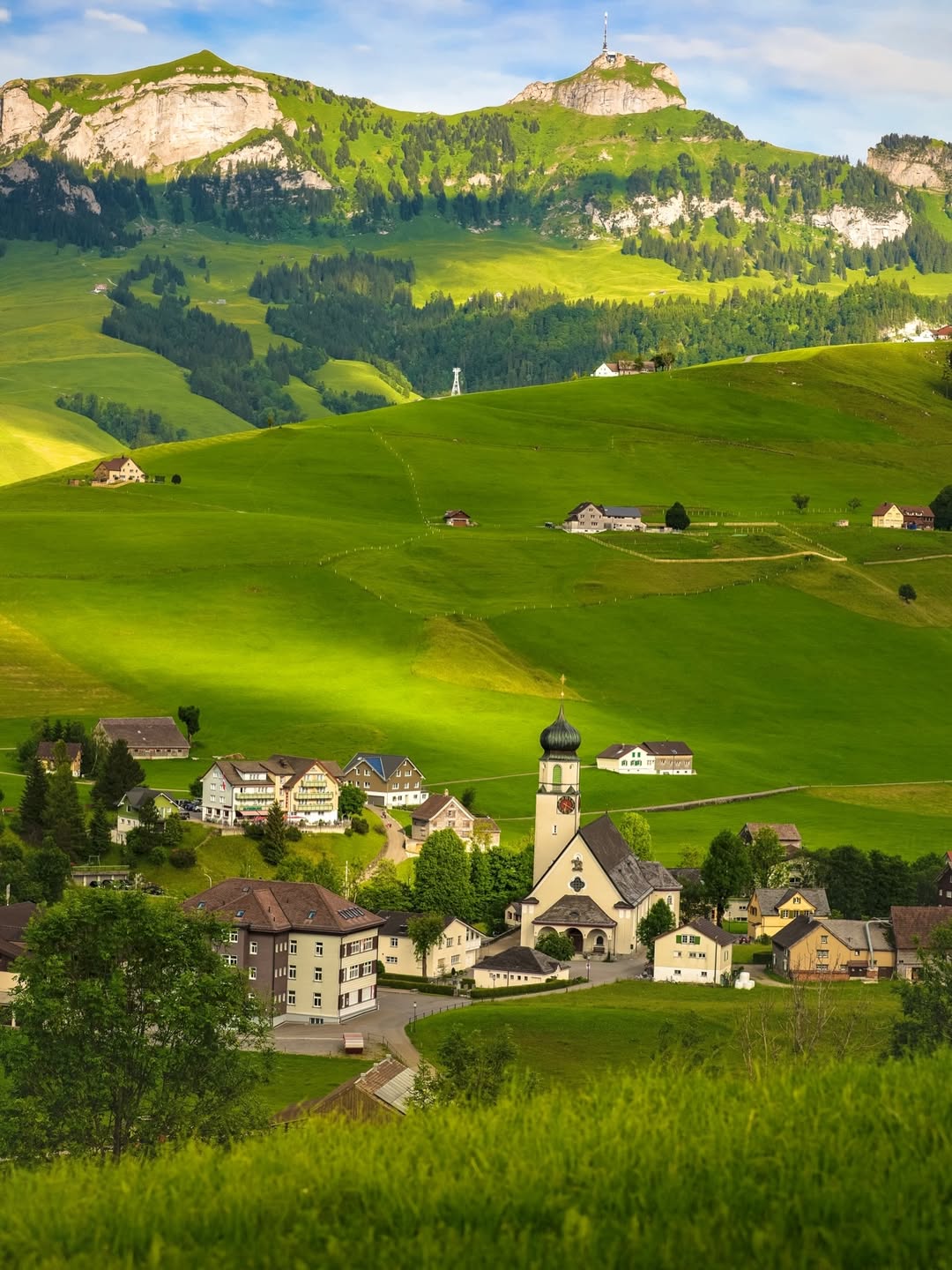
This is a completely different side of winter. You’ll see colorful houses, narrow streets, and locals going about their routines in a village that feels unchanged for decades.
Appenzell sits at 780 meters and is not about big ski resorts. Instead, it offers small-scale slopes, snowshoe trails, and cultural depth. The Ebenalp cable car takes you up to 1,644 meters for around CHF 38 return.
If you visit after fresh snowfall, the entire village looks painted. It’s quiet, authentic, and deeply local.
What to do
- Ride the Ebenalp cable car
- Explore village streets and shops
- Try snowshoeing in Alpstein region
Practical intel
- Best time: December to February
- Cable car: ~CHF 38 return
- Train from Zurich: ~2 hours
- Much quieter than major resorts
Best for
Culture, authenticity, low-key winter escape
11. Saas-Fee (Valais)
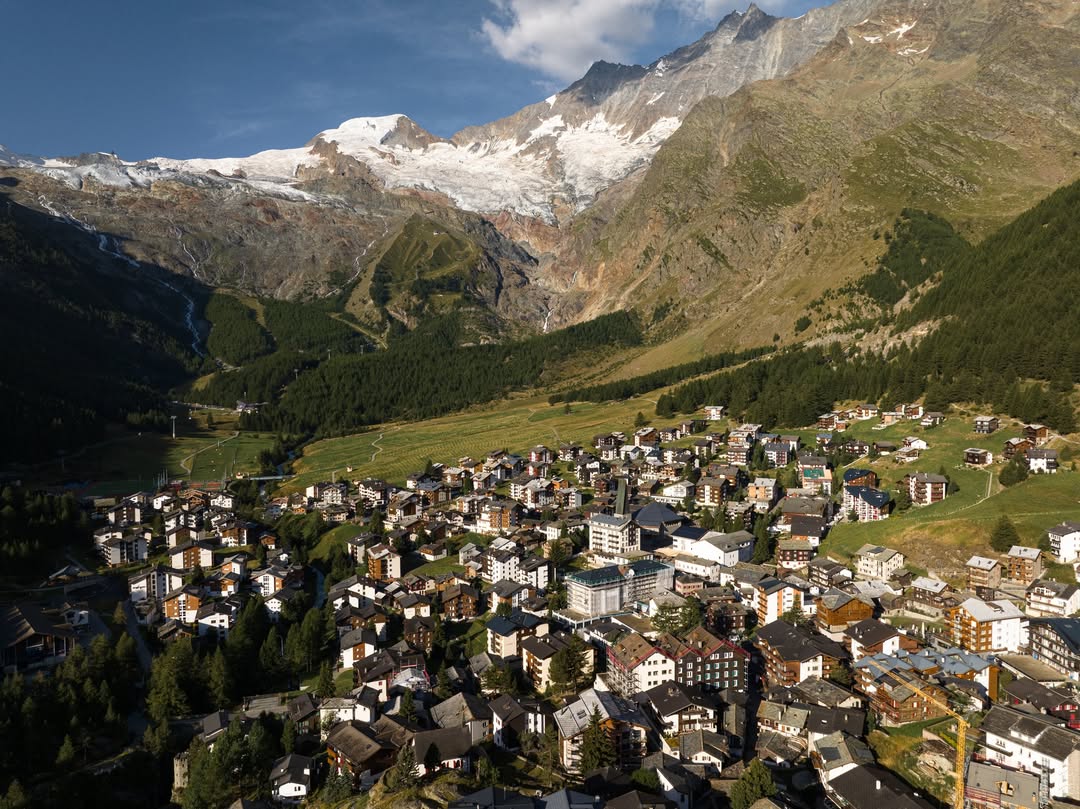
You’ll step into Saas-Fee and notice how enclosed it feels. Surrounded by 13 peaks above 4,000 meters, the village sits at 1,800 meters and feels almost hidden from the rest of the world.
This is one of the few places where you can ski on a glacier at 3,600 meters even in deep winter. The ski area offers about 150 km of pistes, and the Metro Alpin underground funicular takes you up in just minutes. A day pass costs around CHF 75 to 85.
If you head up on a clear day, the snow looks brighter here, almost reflective. The altitude makes everything feel sharper, quieter, more intense.
What to do
- Ski on the glacier slopes
- Ride the Metro Alpin to Mittelallalin
- Walk through the car-free village
Practical intel
- Best time: December to April
- Ski pass: CHF 75–85
- Access: train to Visp then bus (~50 minutes)
- Snow reliability: among the highest in Switzerland
Best for
High-altitude skiing, snow certainty, dramatic alpine setting
12. Andermatt (Uri)
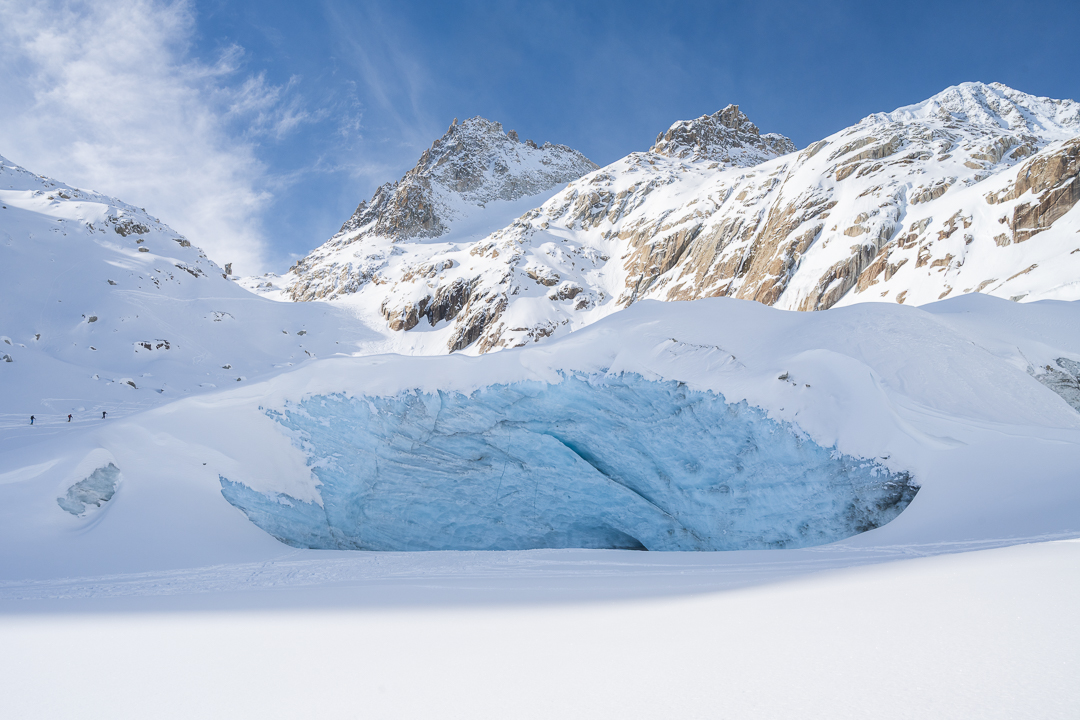
Andermatt feels like it’s in transition. You’ll see traditional chalets alongside modern alpine architecture, all set at 1,444 meters in a wide valley surrounded by passes.
The Andermatt-Sedrun-Disentis ski area has expanded to over 180 km of slopes, with lift passes around CHF 80 to 90. It’s less crowded than major resorts, partly because it’s still developing as a luxury destination.
If you ski here early in the morning, you’ll often get long, empty runs. It’s one of the few places where space still feels easy to find.
What to do
- Ski the Gemsstock for steep runs
- Explore the village and new resort area
- Take scenic train rides through the Alps
Practical intel
- Best time: January to March
- Train from Zurich: ~1.5 to 2 hours
- Ski pass: CHF 80–90
- Crowd level: low to moderate
Best for
Advanced skiing, quieter slopes, emerging luxury
13. Engelberg (Central Switzerland)
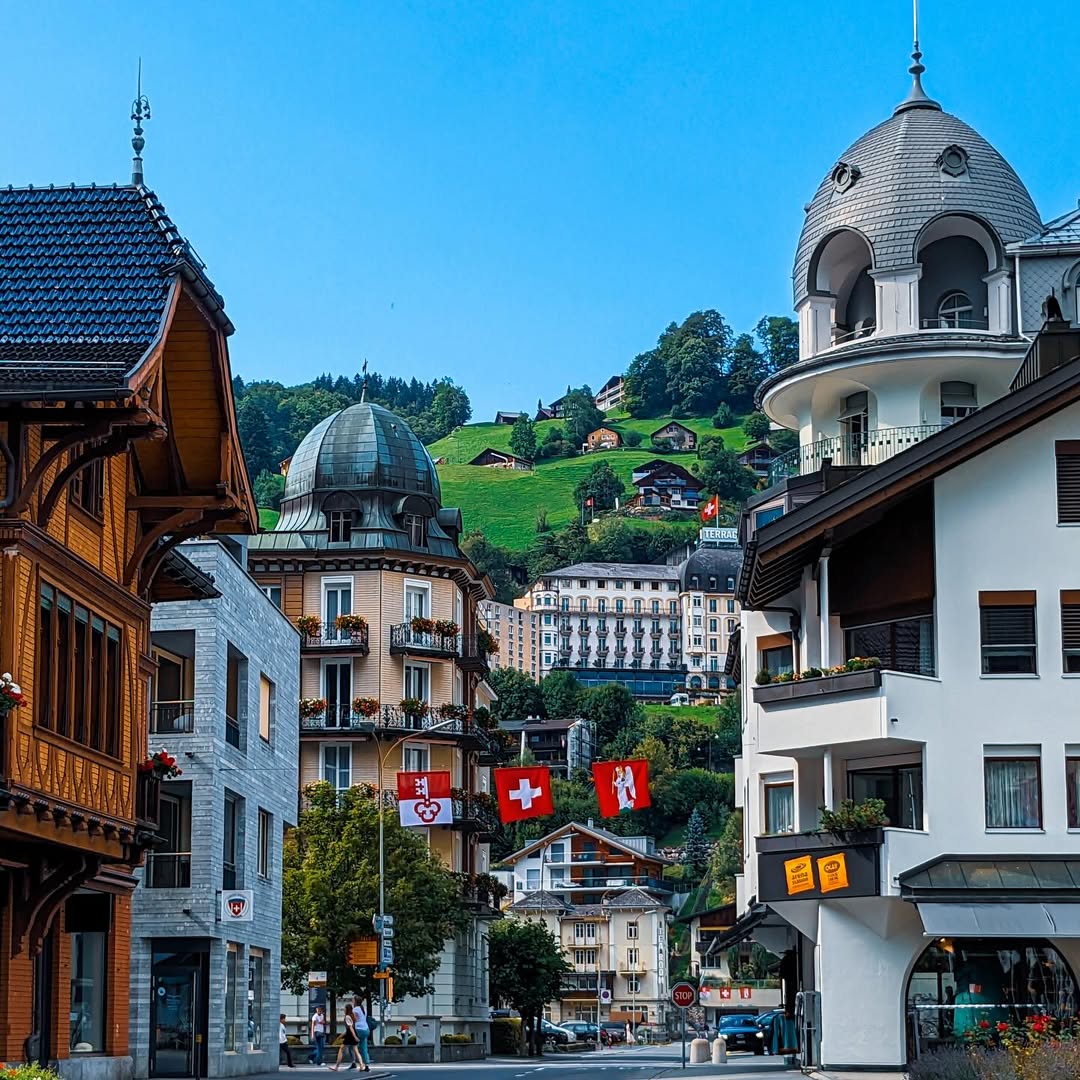
Engelberg feels accessible but still wild. Just 35 km from Lucerne, it rises quickly from 1,000 meters up to Mount Titlis at 3,020 meters.
The Titlis Rotair is the world’s first rotating cable car, completing a full 360° turn during the 5-minute ascent. The ski area offers around 80 km of pistes, but the real highlight is off-piste terrain that attracts advanced skiers from across Europe.
If you stand at the top, you’ll feel the wind shift constantly. It’s one of those places where the weather changes fast and keeps things interesting.
What to do
- Ride the Titlis Rotair cable car
- Ski or snowboard on Titlis slopes
- Walk the Titlis Cliff Walk bridge
Practical intel
- Best time: December to March
- Titlis excursion: ~CHF 96
- Train from Lucerne: ~45 minutes
- Popular day-trip destination
Best for
Quick alpine access, adventure, dramatic viewpoints
14. Verbier
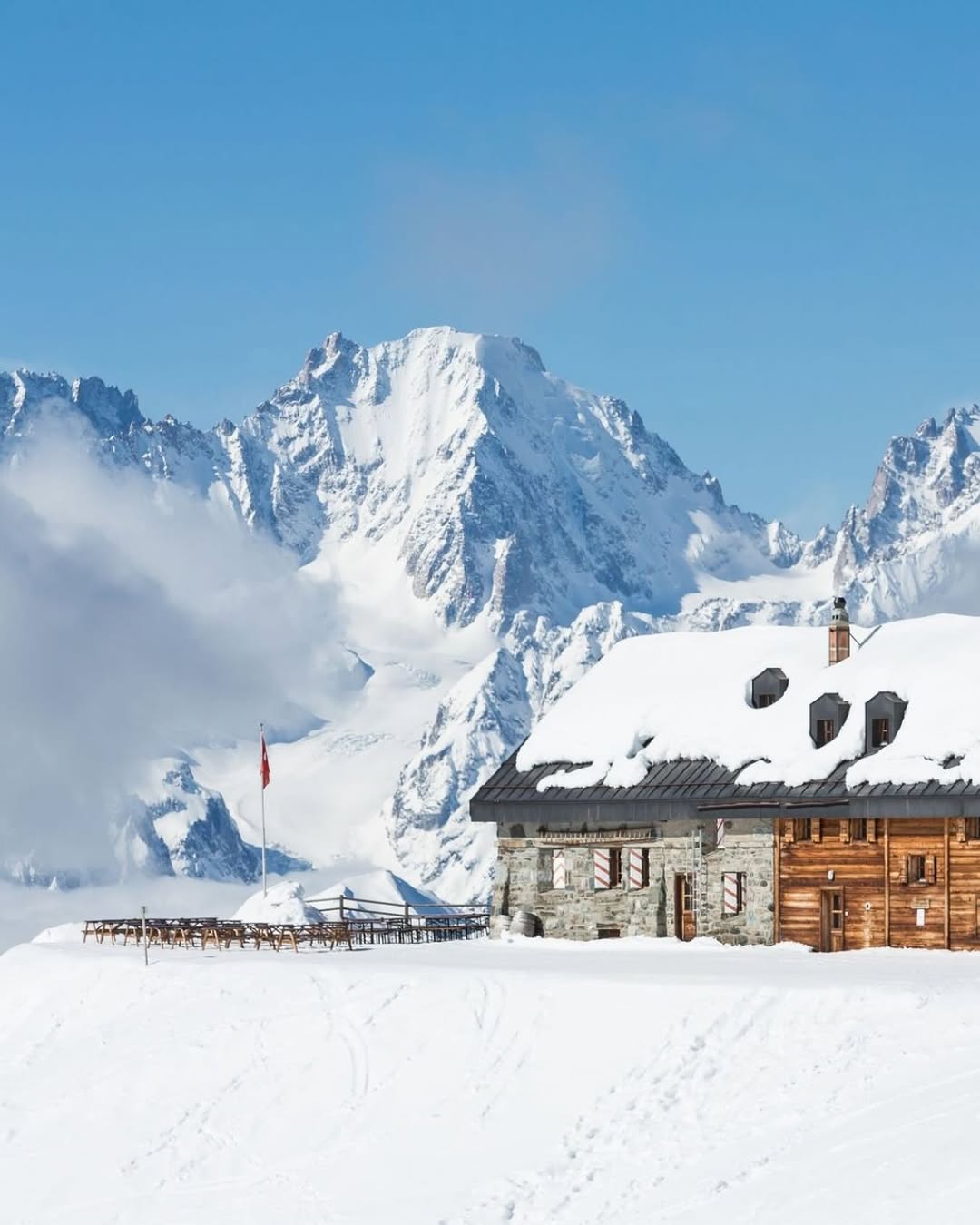
Verbier feels alive. You’ll notice it in the cafés, the slopes, the après-ski energy that starts before sunset and runs late into the night.
Part of the 4 Vallées, it offers over 400 km of ski terrain, making it one of the largest ski areas in Switzerland. The summit at Mont Fort reaches 3,330 meters, with panoramic views of the Matterhorn and Mont Blanc. A ski pass costs around CHF 85 to 95.
If you take the lift up to Mont Fort, the wind can be intense, but the view stretches endlessly. It’s not subtle. It’s overwhelming in the best way.
What to do
- Ski the 4 Vallées network
- Visit Mont Fort summit
- تجربة après-ski scene in the village
Practical intel
- Best time: January to March
- Ski pass: CHF 85–95
- Access: train to Martigny then bus (~45 minutes)
- Known for nightlife and events
Best for
Big ski terrain, social atmosphere, energetic trips
15. Flims (Graubünden)
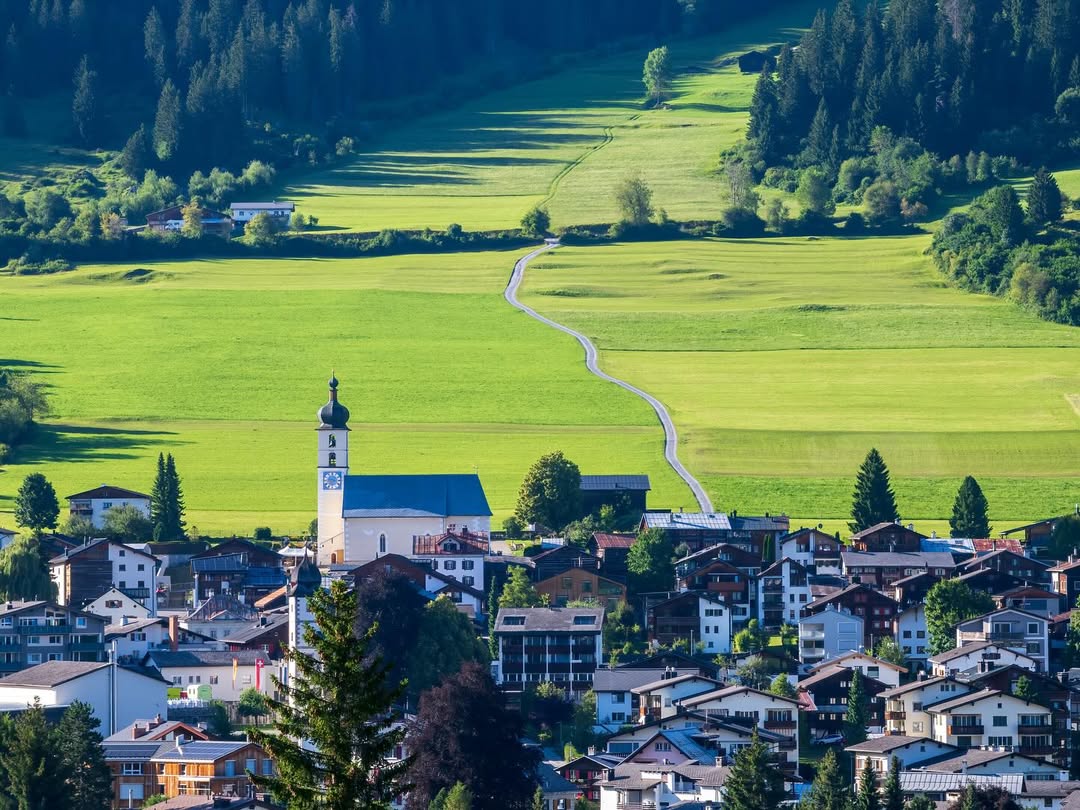
Flims, together with Laax, feels modern and slightly different from classic Swiss resorts. You’ll notice freestyle skiers, snowboarders, and a younger crowd shaping the energy.
The Laax ski area has around 224 km of slopes and is home to one of Europe’s largest halfpipes, 200 meters long and 6.9 meters high. Lift passes are about CHF 80. The nearby Caumasee Lake often freezes, surrounded by snow-covered forest.
If you’re not skiing, walking through the forest trails here feels surprisingly peaceful compared to the busy slopes.
What to do
- Ski or snowboard in Laax parks
- Walk around Caumasee Lake
- Explore winter hiking trails
Practical intel
- Best time: January to March
- Train from Zurich: ~2 hours
- Ski pass: ~CHF 75–85
- Strong snowboard and freestyle scene
Best for
Snowboarding, modern resort vibe, mixed activities
16. Lausanne (Vaud)
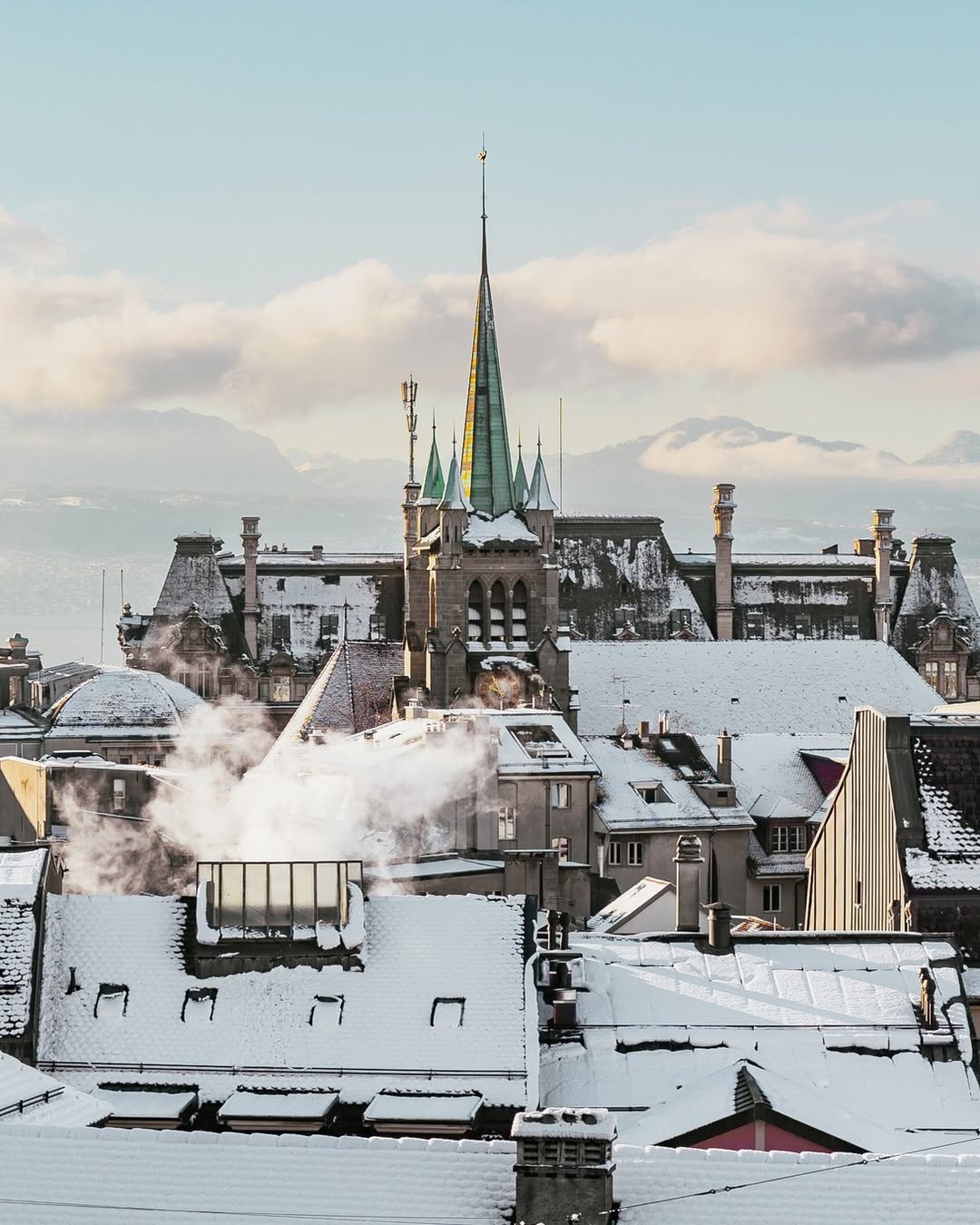
You’ll notice the rhythm here feels different. Built across steep hills along Lake Geneva, Lausanne blends winter calm with city life. Snow lightly dusts rooftops while the lake below stays deep blue and still.
At just 495 meters elevation, temperatures usually range from 0°C to 7°C, making it milder than alpine resorts. The Olympic Museum draws over 250,000 visitors annually, and the metro system makes it one of the easiest Swiss cities to navigate. A lakefront walk can stretch 4 to 6 km depending on your route.
If you go near sunset, the light over the lake softens everything. It’s less dramatic than the Alps, but more livable, more real.
What to do
- Visit the Olympic Museum
- Walk the Ouchy lakeside promenade
- Explore the old town and cathedral
Practical intel
- Best time: December to February
- Train from Geneva: ~45 minutes
- Museum entry: ~CHF 20
- Minimal snow in city, more in nearby hills
Best for
City comfort, culture, lakeside winter
17. Sion (Valais)
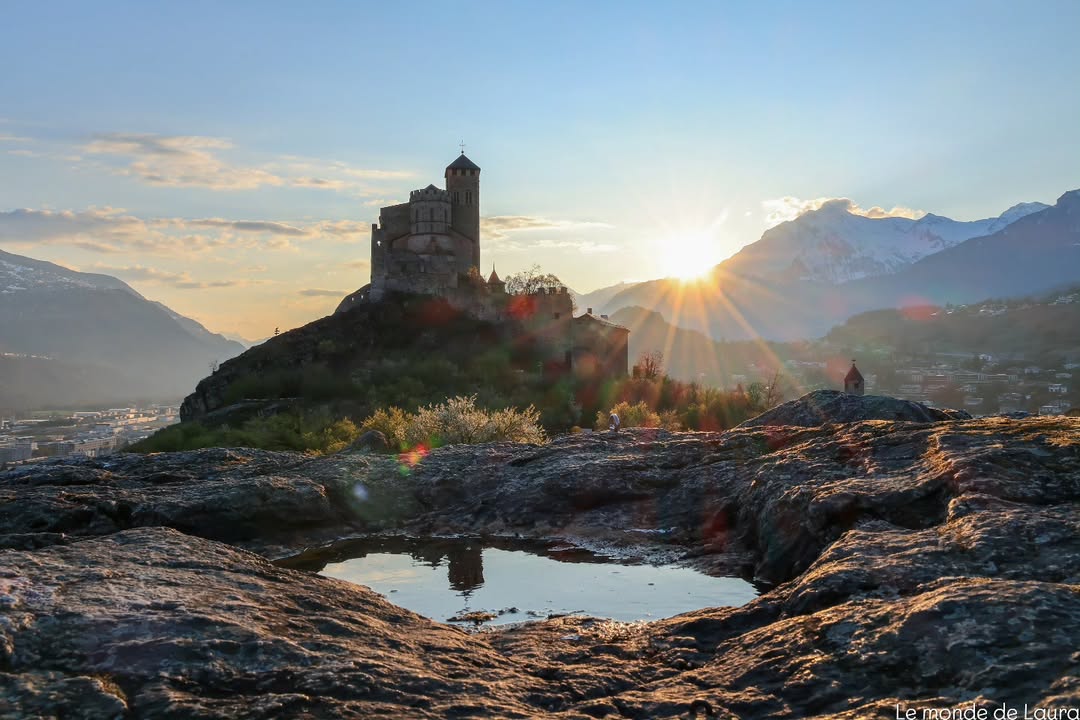
Sion feels grounded in history. You’ll walk through narrow streets and suddenly look up to see two castles, Valère and Tourbillon, sitting on rocky hills about 100 meters above the town.
At 512 meters elevation, winters are relatively dry here, with temperatures around −2°C to 6°C. The region gets over 2,000 hours of sunshine annually, making it one of Switzerland’s sunniest areas even in winter.
If you climb up to the castles, it takes about 20 to 30 minutes. From the top, you’ll see the Rhône Valley stretching wide, framed by snowy peaks.
What to do
- Walk up to Valère Basilica
- Explore old town streets
- Visit nearby vineyards (yes, even in winter)
Practical intel
- Best time: January to February
- Train from Geneva: ~2 hours
- Castle access: mostly free
- Quiet compared to major tourist towns
Best for
History, sunshine, slower-paced exploration
18. Kandersteg (Bern)
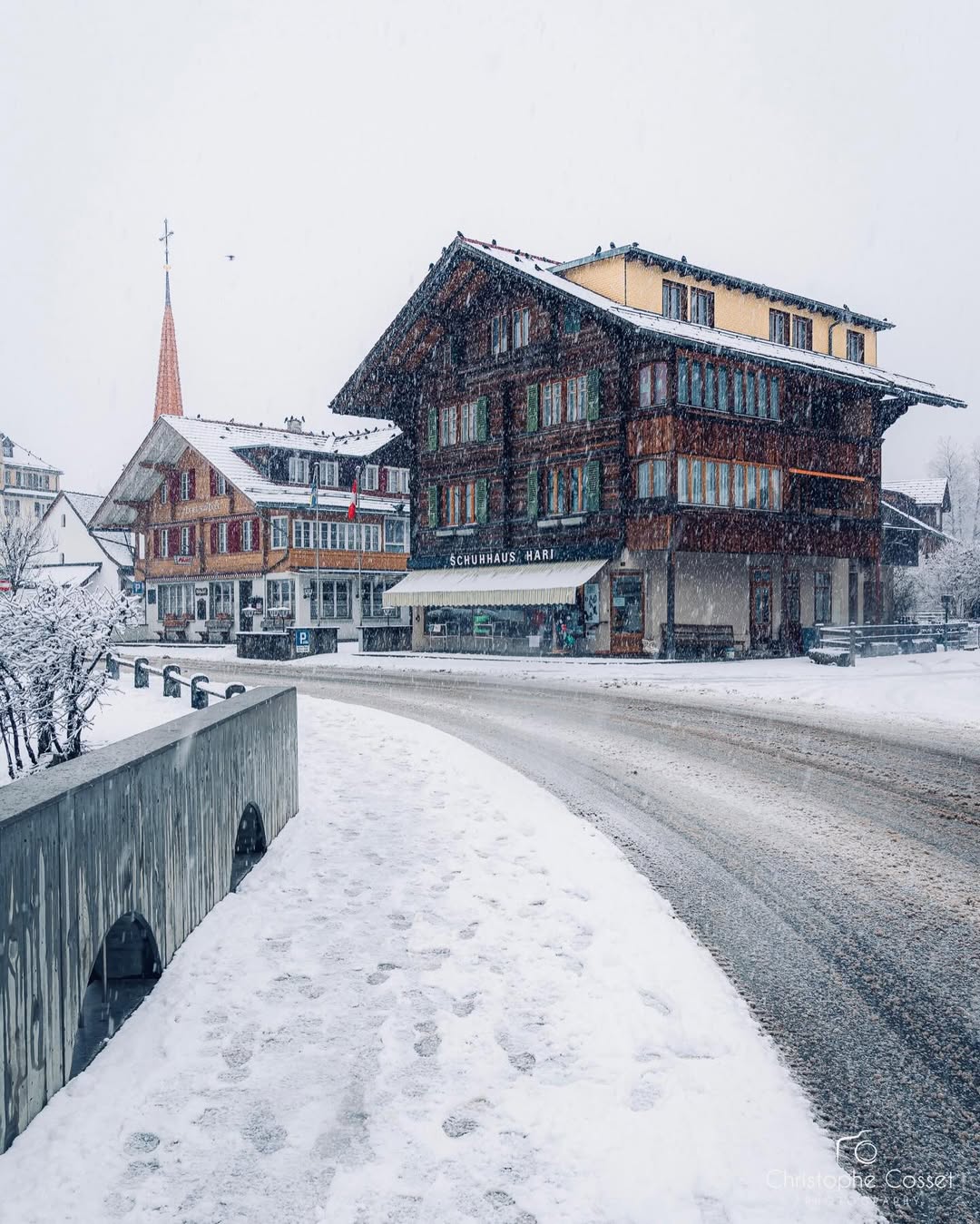
Kandersteg feels like a hidden pocket of winter. You’ll arrive at 1,174 meters and find a village surrounded by steep cliffs and deep snow, but without the heavy crowds.
The highlight is Oeschinen Lake, sitting at 1,578 meters. In winter, it often freezes and becomes accessible by a 20-minute gondola ride followed by a 25-minute walk. Entry to the gondola is about CHF 30 return.
If you go after fresh snowfall, the lake looks completely untouched. It’s quiet enough that you’ll hear your own footsteps echo.
What to do
- Visit frozen Oeschinen Lake
- Try sledding or cross-country skiing
- Walk winter hiking trails
Practical intel
- Best time: January to March
- Gondola: ~CHF 30 return
- Train from Interlaken: ~1 hour
- Low crowd levels
Best for
Nature, quiet escapes, winter walking
19. Bellinzona (Ticino)
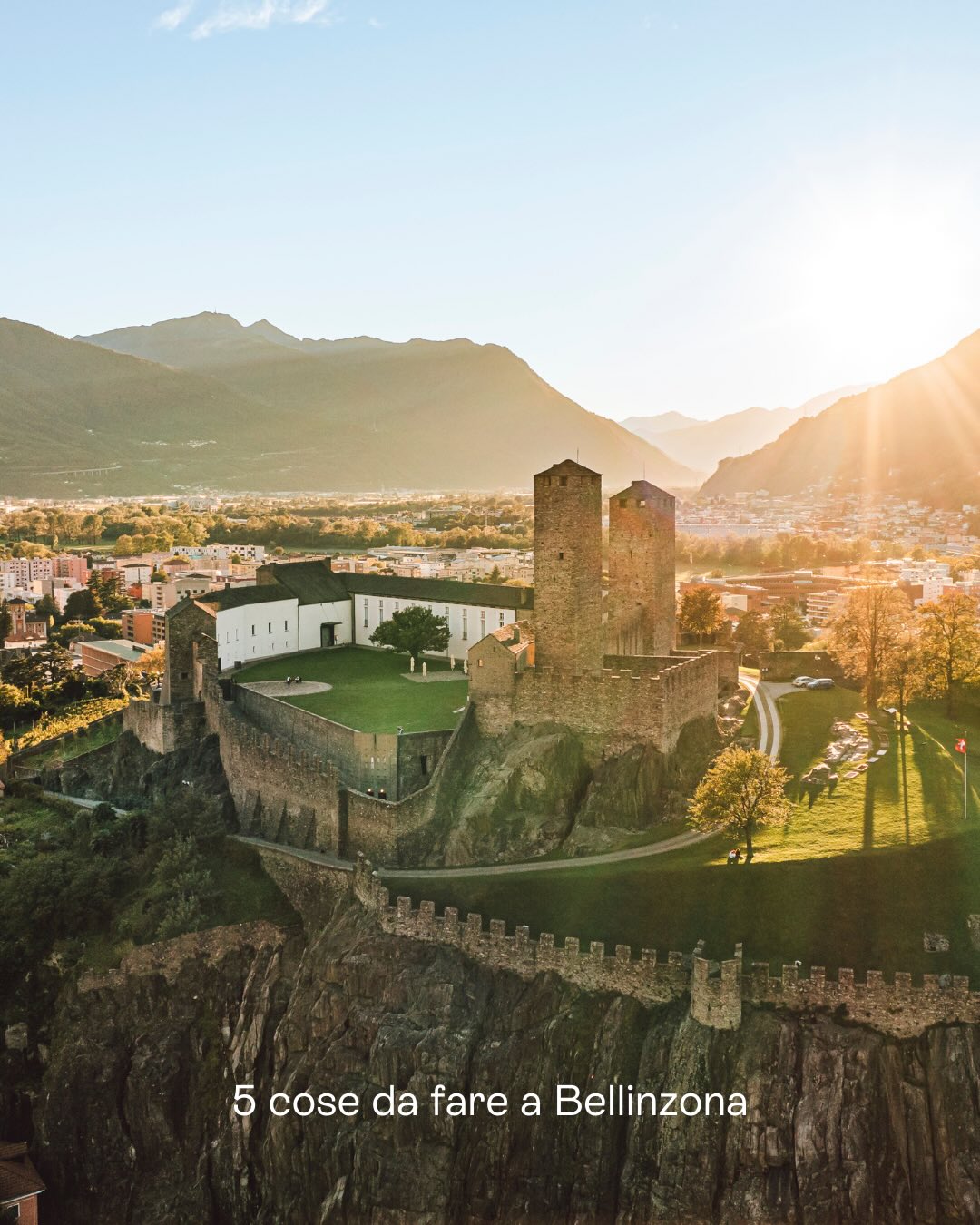
This is where winter shifts tone again. Bellinzona sits at just 238 meters and feels almost Italian, even in winter. You’ll notice palm trees mixed with medieval stone walls.
The town is famous for its three UNESCO-listed castles, visited by over 150,000 people each year. Temperatures usually stay between 2°C and 10°C, making it one of the warmest winter spots in Switzerland.
If you walk between Castelgrande, Montebello, and Sasso Corbaro, the paths connect over about 2 to 3 km. It’s a slow, scenic way to explore history without the alpine cold.
What to do
- Visit all three castles
- Walk the historic walls
- Explore local markets and cafés
Practical intel
- Best time: December to February
- Train from Zurich: ~2 hours
- Castle entry: ~CHF 10–15
- Rare snowfall
Best for
Mild winter, history, cultural contrast
20. Pontresina (Graubünden)
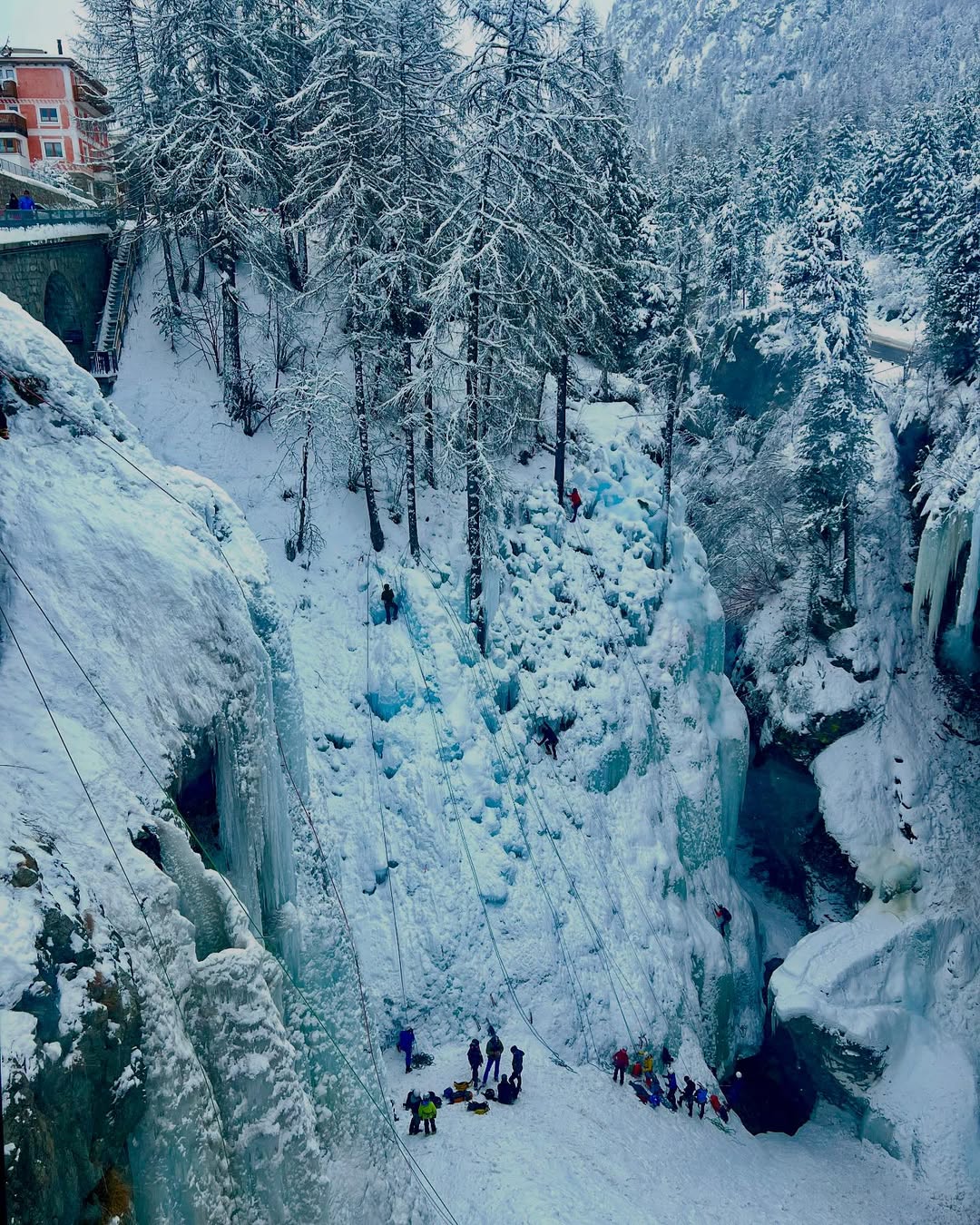
Pontresina feels refined but quieter than St. Moritz. Sitting at 1,805 meters, it opens up toward glaciers and long, sunlit valleys.
The area offers over 220 km of cross-country ski trails, some of the best in Switzerland. The Diavolezza cable car takes you up to nearly 3,000 meters, with views of the Morteratsch Glacier stretching about 7 km. A return ticket costs around CHF 65.
If you go up late afternoon, the glacier turns soft blue and pink as the light fades. It’s subtle, but deeply memorable.
What to do
- Cross-country ski in Engadine valley
- Ride Diavolezza cable car
- Walk winter trails
Practical intel
- Best time: January to March
- Train from St. Moritz: ~10 minutes
- Cable car: ~CHF 60–70
- Much quieter than nearby resorts
Best for
Cross-country skiing, scenic calm, alpine elegance



COMMENTS
Please note that all comments will be checked by our team before being approved.