Removable vs. Permanent Camper Van Conversions for a Daily Driver
A van that commutes on Friday and camps on Saturday has two different jobs. Before choosing cabinetry, decide how often you need the original seats, an open cargo floor, or space for something bigger than camping gear. Those days can matter more than the longest trip on your calendar.
A removable conversion trades some convenience at camp for flexibility between trips. A permanent one keeps the bed, storage, and systems in place. There is also a middle ground where the parts you use every day stay put and the weekend gear comes out.
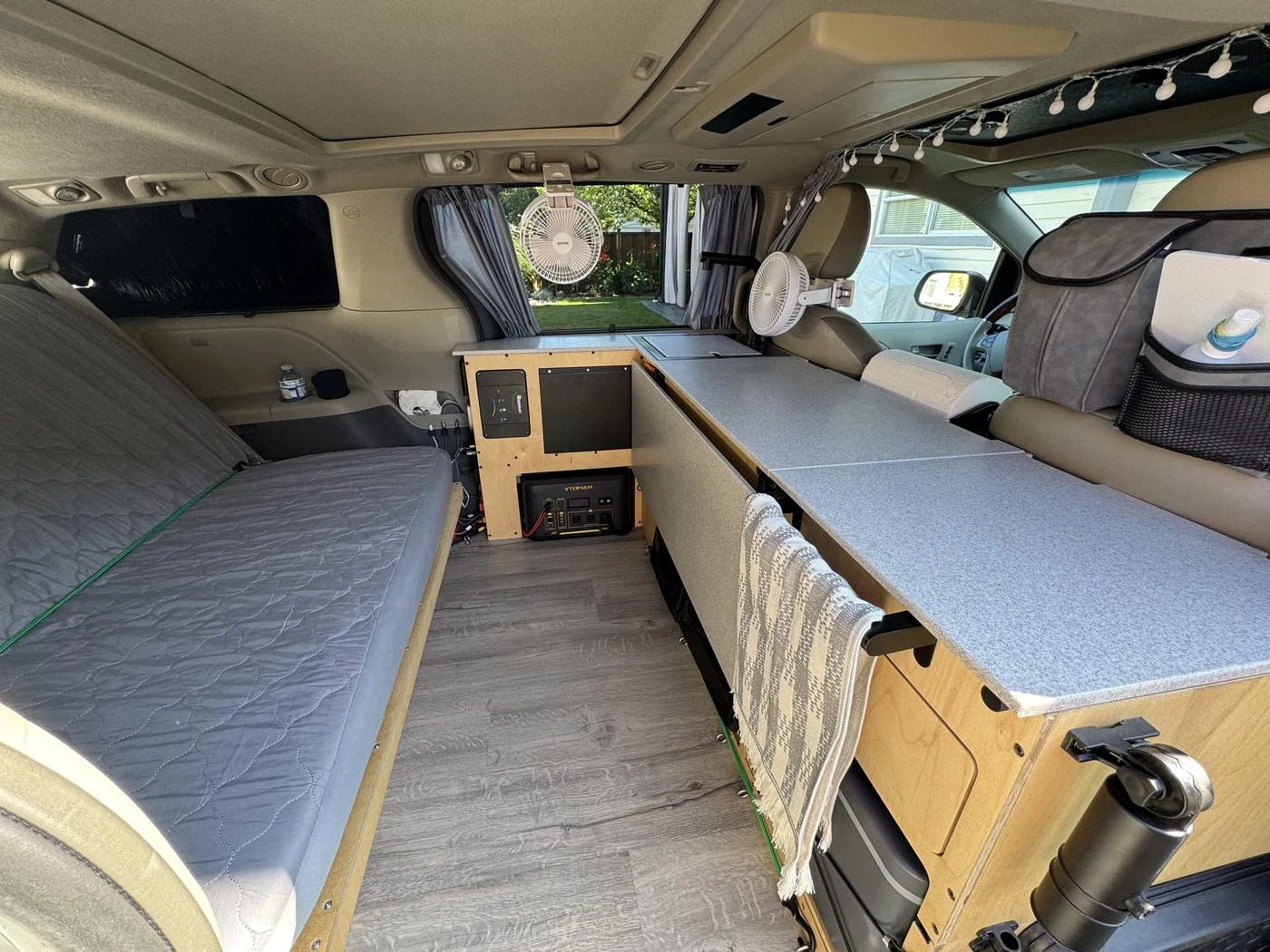
When removable modules make sense
Choose removable pieces if the van still carries passengers or bulky cargo. SolarVanQuest’s Sienna is a useful example because the owner planned for the passenger seats to return. That requirement influenced the floor, kitchen, bed, and how the pieces fit.
Andriy’s SolarVanQuest build notes describe a setup that comes out in about an hour. Use that as an example of how the changeover can work. For your own build, list the steps in order, including emptying the water and carrying loose gear inside. Try them with the amount of help and storage you’ll usually have on a weeknight.
Be honest about changeover. A module you can lift alone with a clear space in the garage is easier to live with than three heavy boxes that need two people. Measure the door opening, consider how each part is secured during travel, and decide what the van looks like with half the setup removed.
A removable module still needs a secure place during travel. Start with the vehicle’s designated mounting points and the module maker’s instructions. If the layout affects a passenger seat, belt, or airbag, ask a qualified installer about that vehicle and configuration. A module that fits neatly between cabinets may still need a different way to stay put while the van is moving.
When a permanent build earns its footprint
If the van lives in camping mode most of the year, a fixed bed and plumbed sink remove some daily chores. Wiring and storage can go into otherwise awkward corners. The cost is the floor and payload that stay occupied on every errand.
Look at where a permanent build puts its utilities. Vantra’s camper layouts, for instance, show how a built-in sink and electrical equipment can sit alongside a fixed bed and galley. A setup like that makes sense when you use those features on frequent trips. It also leaves you with a smaller cargo opening the next time you need to move something tall.
Try to separate what you want permanently from what you want on the occasional long trip. A fridge, power outlets, or a floor may make sense all year even if the bed platform and water containers come out.
A hybrid setup can keep a finished floor and a small cabinet in the van while leaving the bed and cooking gear removable. Decide what you’d want available on an unplanned overnight stop. If a fridge and lights cover that kind of trip, you can reserve the bulkier pieces for weekends and keep more of the vehicle free during the week.
Do a trial weekend before you commit
Sketch the seats you need on a typical weekday and the gear you take on a typical weekend. Then try the simplest camping setup that fits both. Log what you unpack and move each day. Build the next version around those repeat tasks, with an eye on the conversion layouts that have already solved them.
Try loading the van both ways while you still have a rough mockup. For the weekday layout, load the biggest item you routinely carry and see whether the passenger seats are usable. For the weekend layout, try making the bed without unloading in the rain. Keep a note of every piece you have to move twice. Those are the parts to redesign first.
Photo SolarVanQuest.




COMMENTS
Please note that all comments will be checked by our team before being approved.