The Hard-Sided Camper Trailer That Folds Down for the Drive
Cube Series built a travel trailer that changes height between the highway and the campsite. It travels with the roof lowered. At camp, rigid upper walls rise with the roof to create a space you can stand in.
Most people recognize that basic idea from a pop-up camper. The difference here is the wall material and the way it folds. Cube Series uses rigid panels for the raised walls, making the setup more like unfolding a compact room.
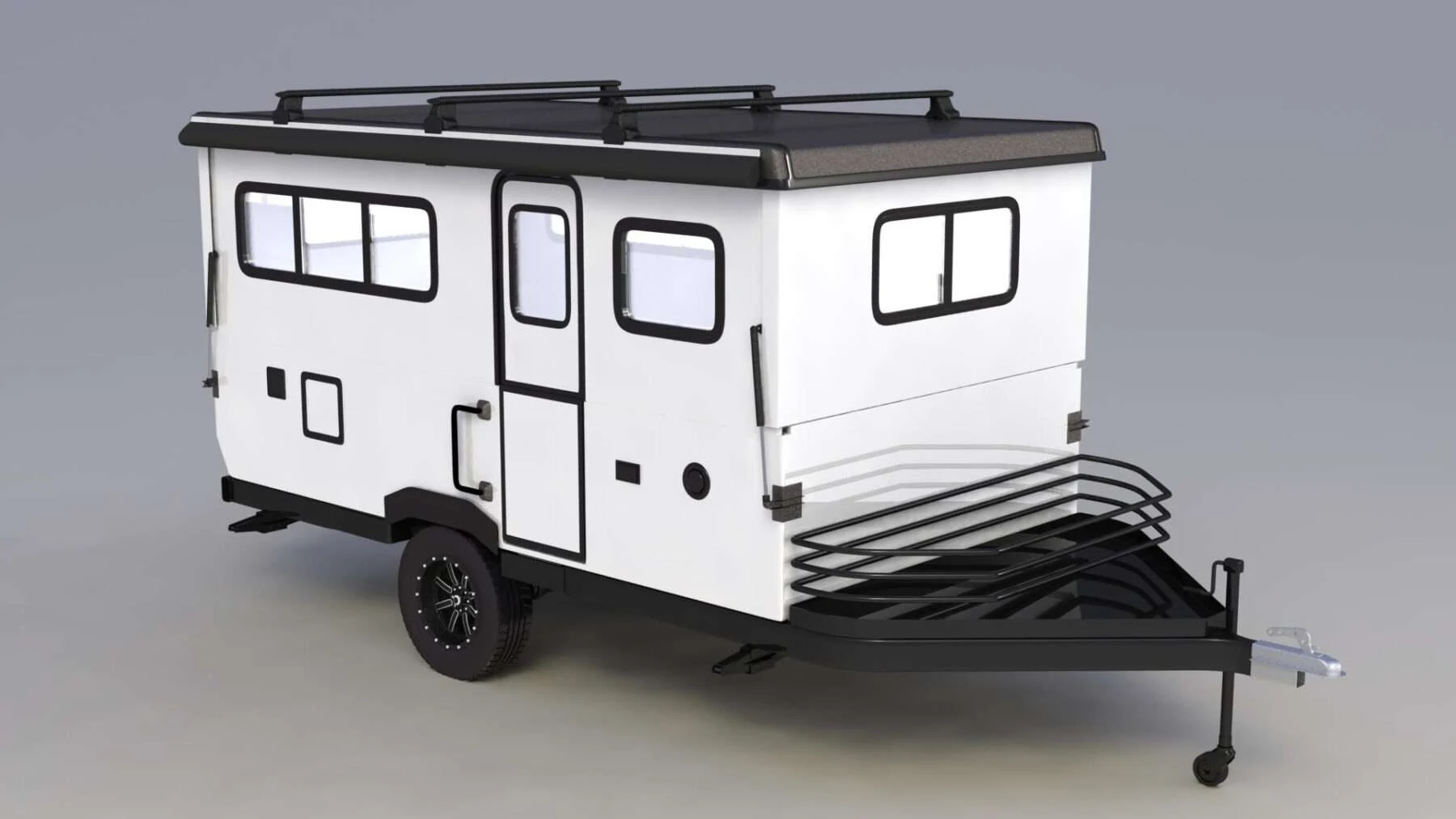
Two heights to plan around
Check the trailer’s lowered height against your garage opening and any clearance limits on the route. At camp, the raised height determines both headroom and how much space you need above the roof. Include any accessories you plan to leave mounted on top.
A short garage opening can be the deciding factor even if there’s enough room once the trailer is inside. Measure the opening at its lowest point, then check the approach. A sloped driveway can change how much clearance you have as the trailer crosses the threshold. Take the measurements with the same roof equipment you would actually store.
Cube Series lists different dimensions for different configurations. Get the travel height, open height, and weight for the version you’re looking at, with the actual equipment fitted.
What you add to the campsite routine
A folding camper gives you a smaller travel profile in exchange for a setup step every time you stop. On a one-night trip, that is part of the arrival routine. For a longer stay, it may be a small price for having a hard-walled interior and more headroom.
Cube Series describes an automated folding wall system and lists electric actuators for the roof. That gives you a different arrival routine from setting up a fixed-roof trailer. Before committing to a site, check for branches and other overhead obstructions. Think about which items you want to be able to reach during the setup as well.
In the builder’s demonstration, watch where the wall sections go as the trailer opens. Pay attention to how much room the mechanism needs and when the door becomes usable.
If you make frequent roadside stops, ask to see the trailer with the roof fully lowered. Check what the door opens onto and what you can reach in that position. A folding design may save height on the road, but the way it handles a lunch stop can matter as much as how it looks at camp.
Where it fits in the trailer lineup
This kind of camper makes the strongest case for someone who wants a compact tow and storage footprint but still wants standing room at camp. A small fixed-roof trailer avoids the setup step. A canvas pop-up approaches the same space problem with different materials. See our small travel trailer guide for more layouts.
Rigid panels are the feature that makes this trailer different from a canvas pop-up. Compare how the panels and seals come together, especially where the folding walls meet the roof. An open display shows the finished room. Watching the trailer go up and come back down tells you what you’ll have to do on every trip.




COMMENTS
Please note that all comments will be checked by our team before being approved.